

Last updated September 10, 2026
Full 25-point door and opener safety check with every visit - springs, cables, rollers, tracks, and your LiftMaster or Chamberlain opener included
You get a price before we start. It does not change when the truck arrives.




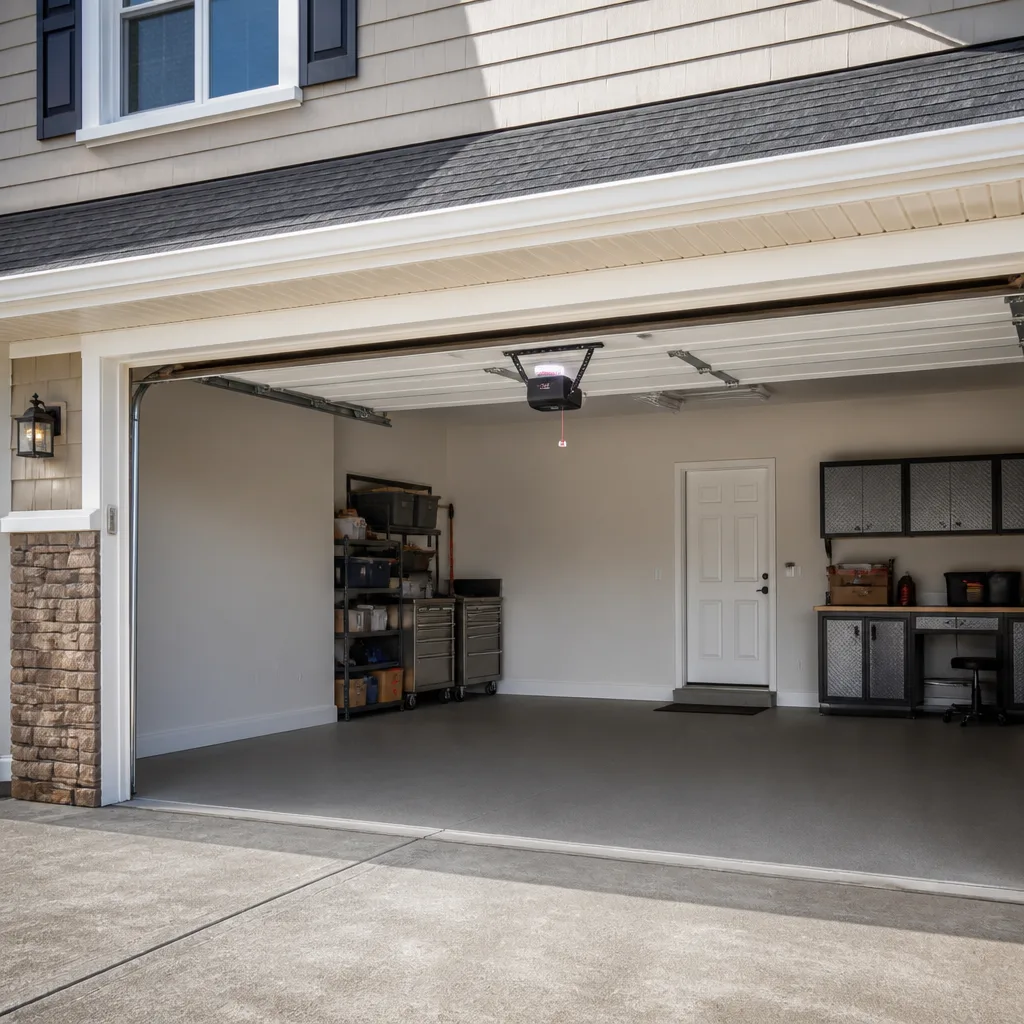
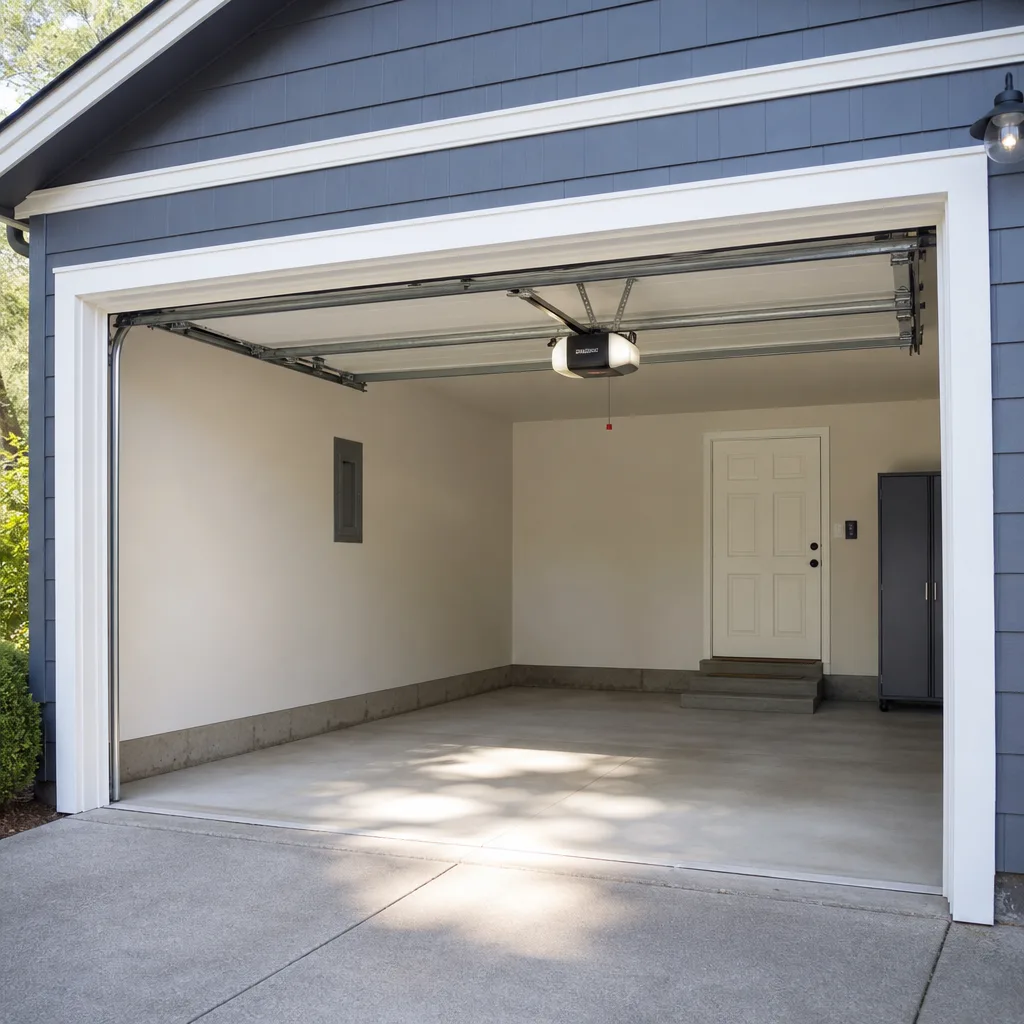
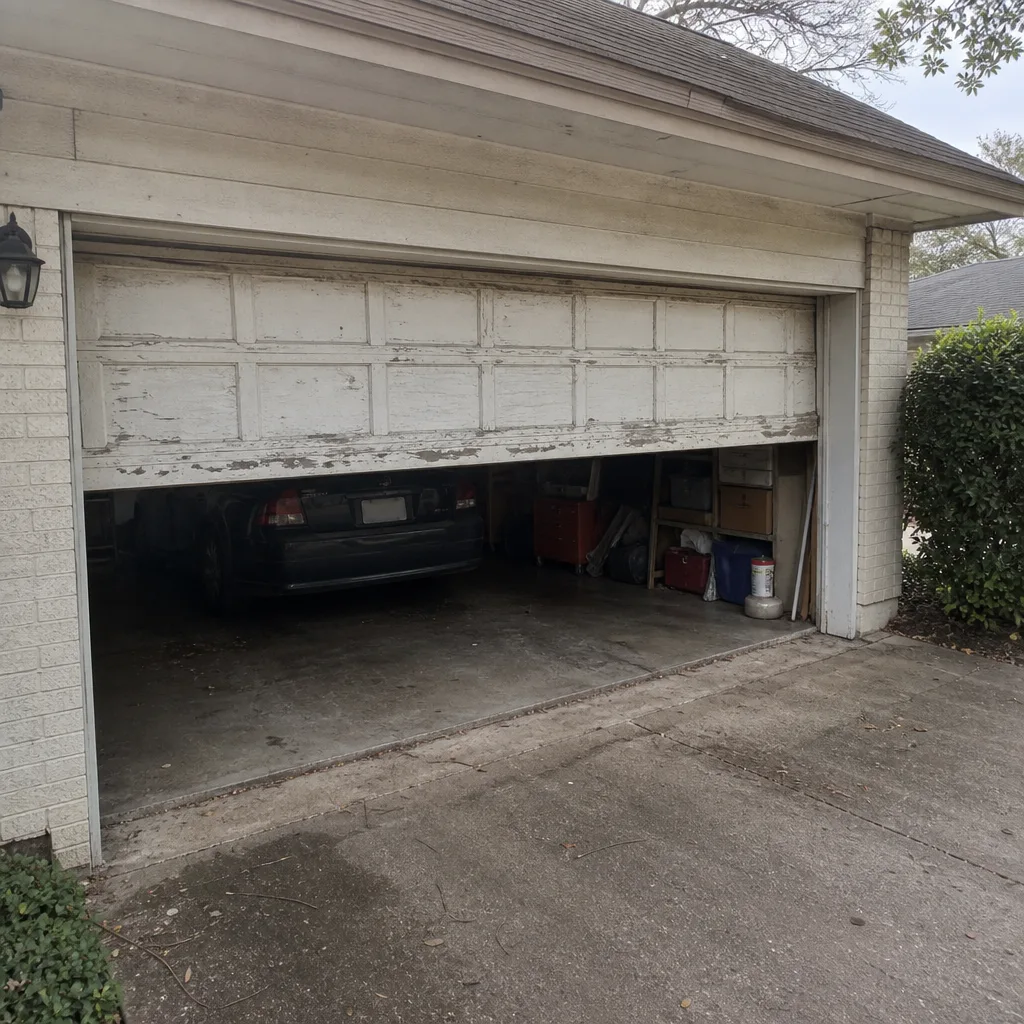 Before
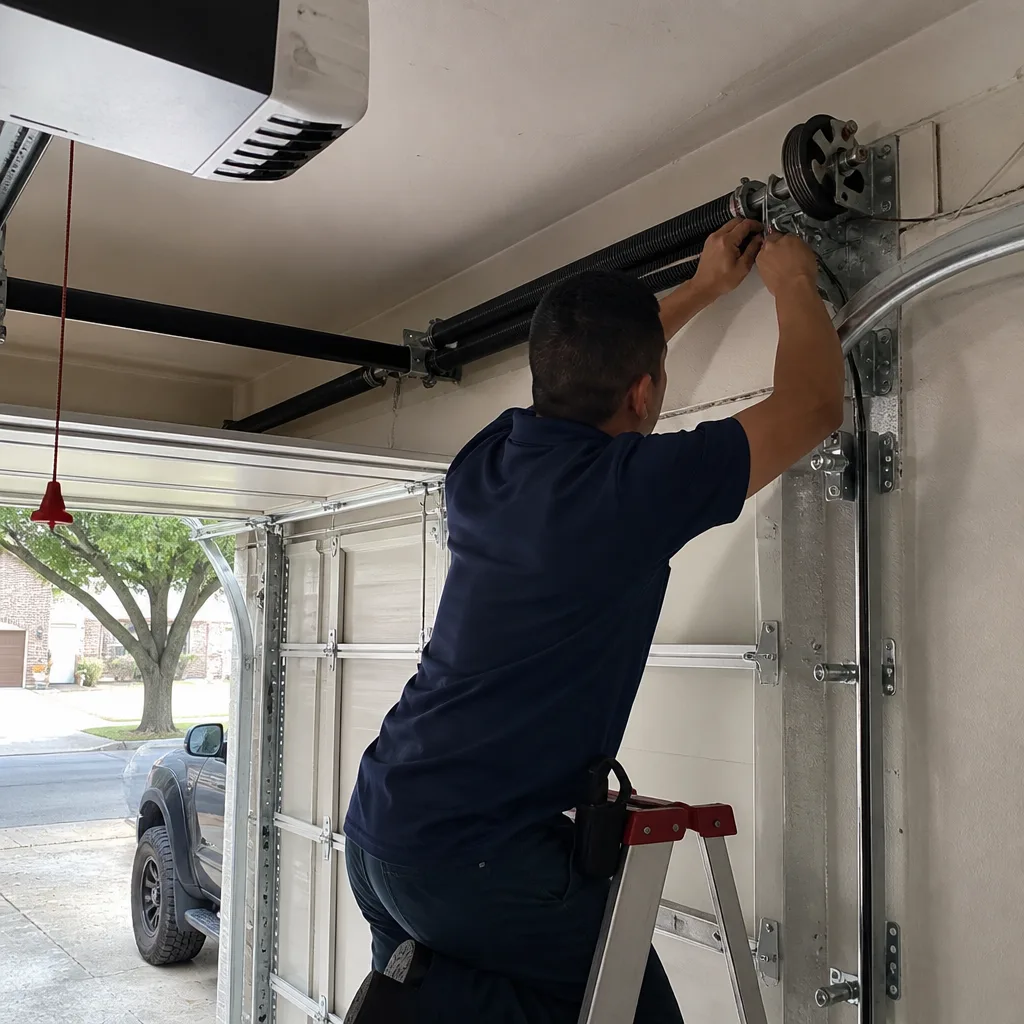 After
After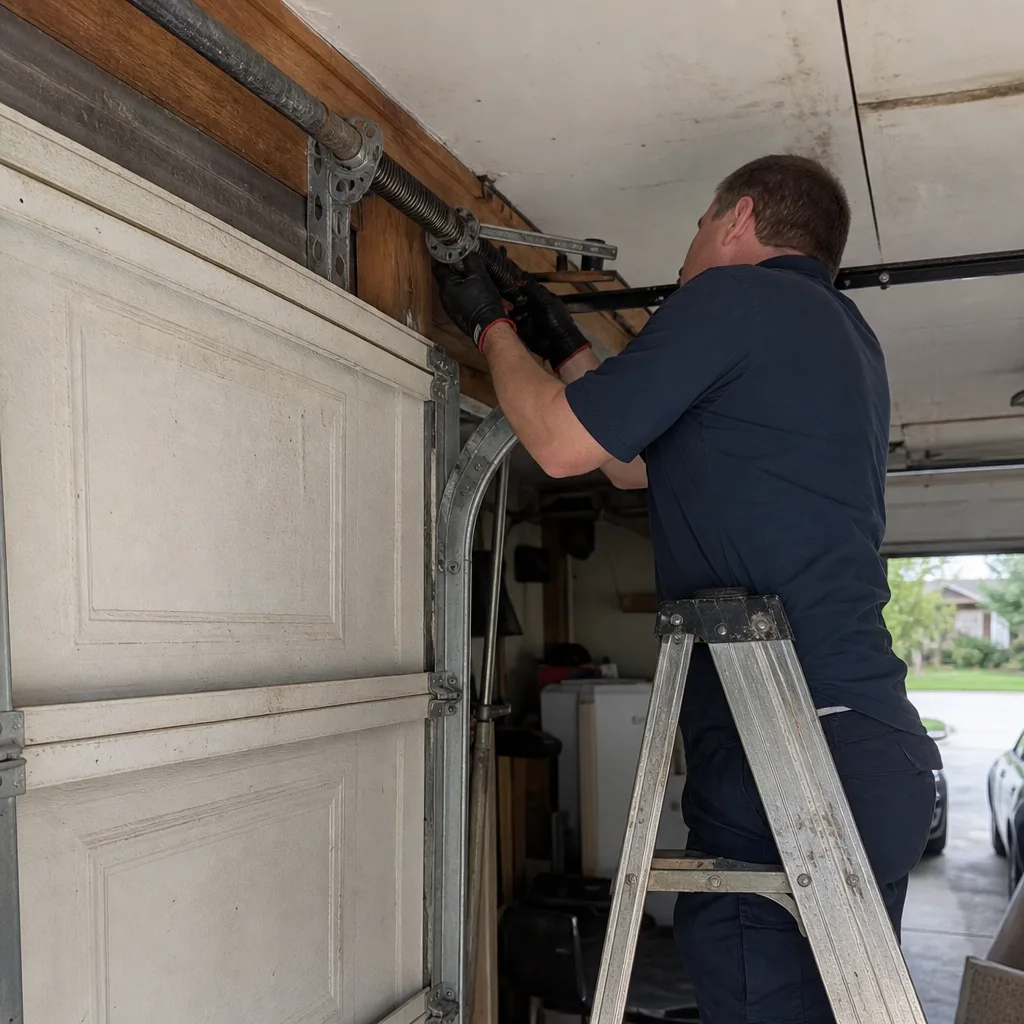 Before
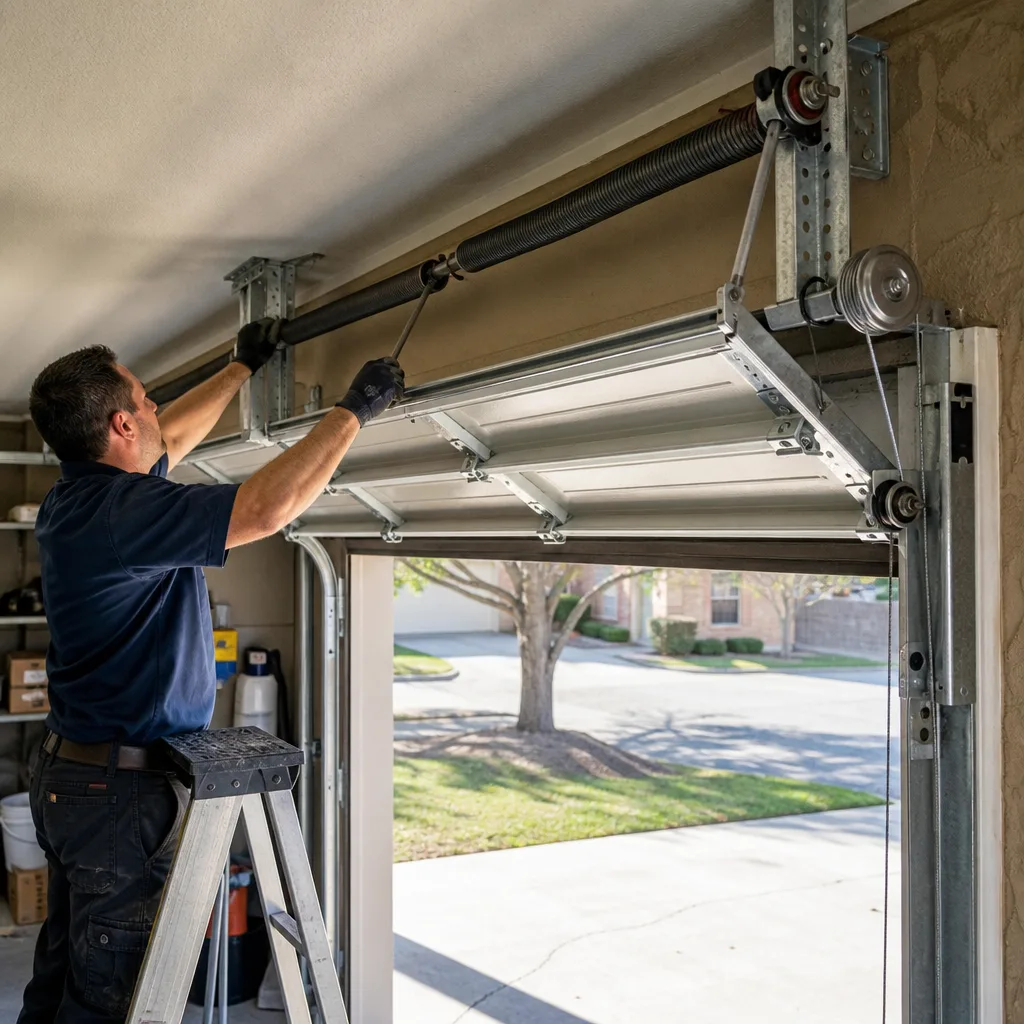 After
After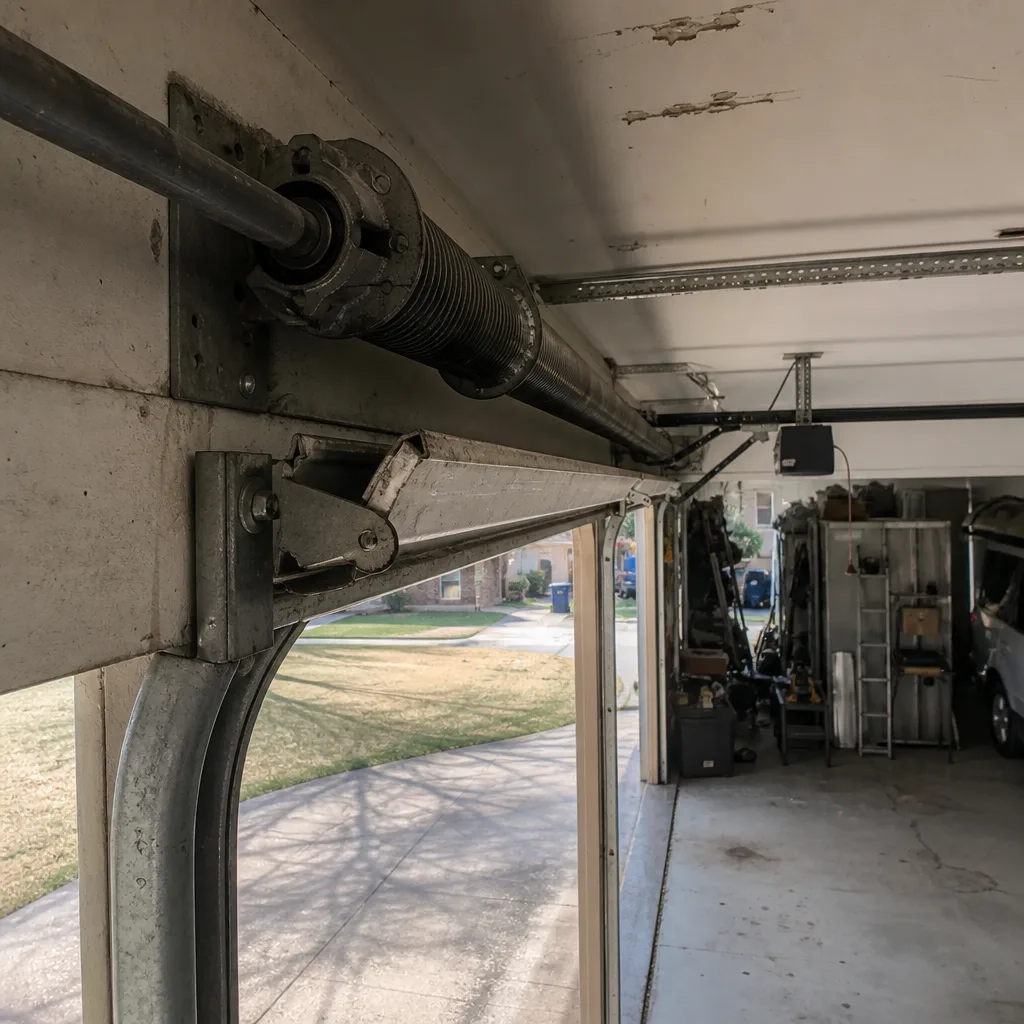 Before
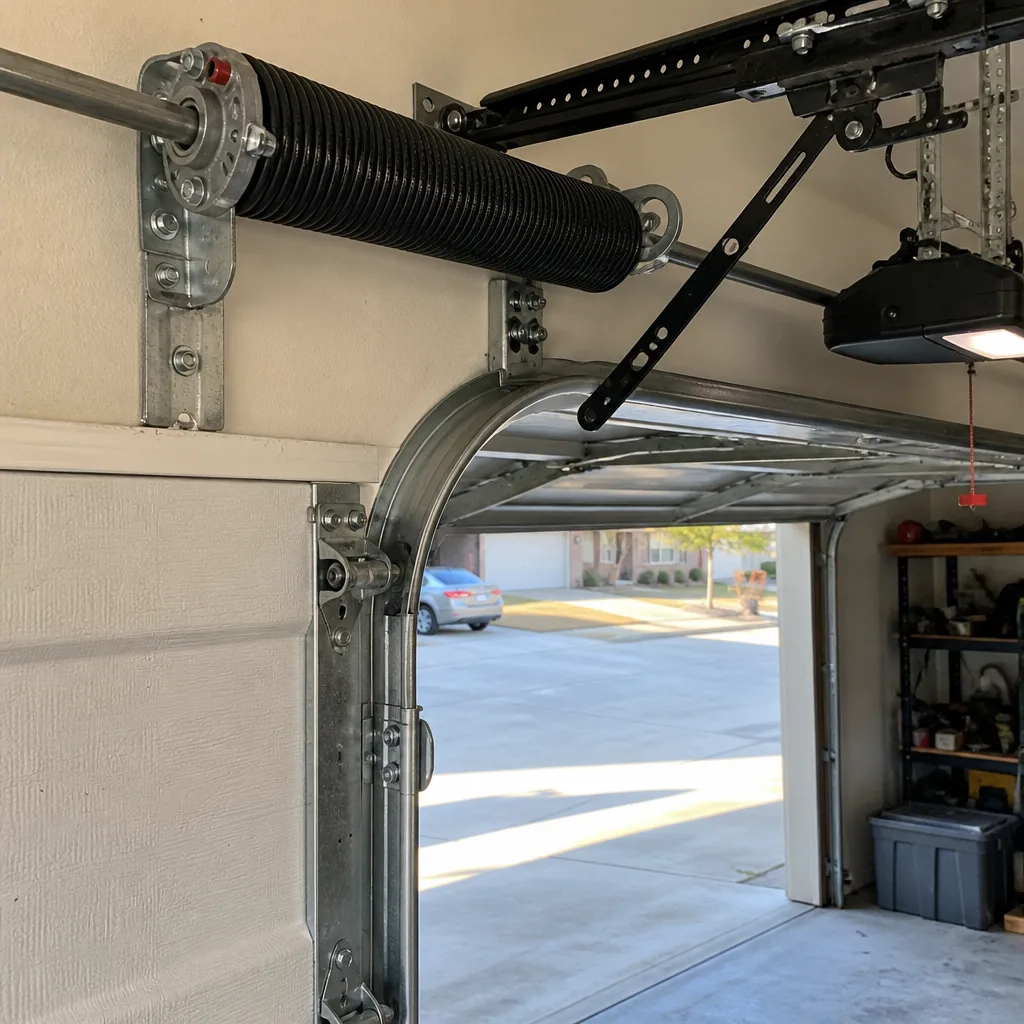 After
AfterGarage Door Installation Maintenance Checklist for Mesquite Homeowners
The number one reason a brand-new garage door fails within five years in North Texas isn’t the hardware. It’s that nobody did a single follow-up check after installation day. A door installed in April gets tuned once, then blamed in August when the heat warps a panel or a roller seizes. This guide is the checklist I wish every Mesquite homeowner had the day after our Garage Door Installation services are complete. You’ll learn exactly what to check, when to check it, and which products actually hold up when your garage hits 110 degrees in July. You’ll also learn the three-minute inspection I run on every job that catches most problems before they become emergency calls at nine at night.
Quick Answer
A garage door maintenance checklist for Mesquite homeowners should follow the local climate: pre-summer heat prep in April, monsoon-season track inspection in August, and a post-freeze cable check in February. Perform a visual inspection monthly, lubricate moving parts twice a year with a silicone-based product, and run through the 30-day, 90-day, and one-year post-installation checks outlined below. The whole routine takes under twenty minutes a season and will add years to your door’s life.
Table of Contents
- Why Your New Garage Door Needs Maintenance in Mesquite
- The Mesquite Month-by-Month Maintenance Calendar
- Lubrication: What Works in Texas Heat and What Destroys Your Rollers
- Post-Installation Checks: 30 Days, 90 Days, and One Year
- How to Log Maintenance to Protect Your Warranty
- The Three-Minute Visual Inspection I Run on Every Job
- Track Alignment and Balance Checks Mesquite Homeowners Can Do
- Hardware That Settles, Shifts, and Loosens After Installation
Why Your New Garage Door Needs Maintenance in Mesquite
Mesquite sits in a climate band that punishes garage doors harder than almost anywhere else in the country. Summer temperatures routinely push past 100 degrees, and your garage, especially if it faces west, can spike 20 to 30 degrees higher than the outdoor reading. That heat does specific things: it bakes the grease out of rollers, it makes cheap lubricants run like water and drip onto your door panels, and it accelerates metal fatigue on the torsion springs mounted above your door. A spring rated for 10,000 cycles doesn’t care about the calendar. It cares about heat, humidity swings, and how often the door opens. In Mesquite, a door that gets opened four times a day is working in conditions that would make a door in Minnesota last half as long.
Then there’s the clay soil. Mesquite sits on expansive clay that shifts with moisture. Your garage slab moves, subtly, season after season. That movement transfers to the door tracks, and over time, the tracks drift out of square. By the time you notice a grinding sound, the damage is already done. This is why regular inspections aren’t optional here. They’re how you catch a quarter-inch track shift before it becomes a bent panel and a $400 repair.
The good news is that maintenance on a garage door is straightforward work. Most of it requires nothing more than your eyes, your ears, and ten minutes a season. The key is doing it on a schedule that matches what Mesquite’s climate actually throws at your door.
The Mesquite Month-by-Month Maintenance Calendar
A generic checklist tells you to lubricate the hinges twice a year. Fine. But in Mesquite, timing matters. If you lubricate in January, the cold snap that sometimes hits in February will thicken the lubricant and leave your rollers sticky. If you lubricate in July, the product evaporates before it does any good. Here is the calendar I recommend to every homeowner after we finish a Garage Door Installation in Mesquite.
January: The Quiet Inspection
Doors get less use in January, which makes it the ideal month to inspect everything that isn’t moving. Check the weather seal along the bottom of the door for cracks, flattening, or gaps where cold air gets in. Look at the cables on both sides from top to bottom. If you see any fraying, broken strands, or rust, write it down. Don’t touch the cables, don’t adjust them, don’t try to fix them. A door is 200 pounds riding on two springs. Respect it. Call someone who handles these components professionally.
February: Post-Freeze Cable and Spring Check
When Mesquite gets a hard freeze, metal contracts. Torsion springs under tension then mechanical expansion and contraction is a recipe for micro-fractures that eventually become breaks. In February, after the last freeze, run your eyes along the full length of each spring. Look for gaps in the coil, rust spots, or a spring that looks like it has separated. Then test the balance (instructions below in the track alignment section). A door that feels heavier in February than it did in December is telling you something.
March: The Spring Tune-Up
March is when I tell Mesquite homeowners to do the full lubrication and hardware tightening routine. The weather is mild enough that the lubricant cures properly, and it’s early enough to catch problems before the heat arrives. Do your full visual inspection, lubricate all moving parts (specific products below), and tighten every bolt and lag screw you can reach with a socket wrench. I also recommend running the Garage Door Opener in Mesquite through a full open and close cycle while watching and listening. A squeak in March becomes a seizure in July.
April: Pre-Summer Heat Prep
This is the most important maintenance month in Mesquite. Before the heat arrives, address anything that showed up during your winter inspections. Replace a weather seal if it’s cracked. Adjust a sensor that’s been finicky. Tighten a track bolt that’s worked loose. April is also the right time to check your safety sensors and review Garage Door Permits, Codes & Inspections in TX: What You Need to Know, because the summer sun hits Mesquite garages at a low angle in the late afternoon and can blind a sensor that’s slightly out of alignment. If your door reverses when it shouldn’t or doesn’t reverse when it should, call before the first 100-degree day.
May through July: The Watch Months
During the hottest stretch of the year, your job is observation, not intervention. Once a month, open and close the door while standing outside and listening. Watch for hesitation, jerking, or a change in the sound. Look at the rollers as they pass through the track. A roller that wobbles or doesn’t spin is about to fail. If you notice anything in July, call early. Heat makes every repair harder, and the longer you wait, the more parts you’ll replace. Otto’s Garage Door answers the phone 24/7, including during summer evenings when it’s finally cool enough to think.
August: Monsoon-Season Track Inspection
August in Mesquite brings the pattern of sudden downpours followed by 100-degree afternoons. That cycle of wet then extreme dry is brutal on hardware. Moisture gets into microscopic cracks in the track, then the heat bakes it out, leaving oxidation behind. In August, run a rag along both tracks from top to bottom. If you feel rough spots, clean them with a dry cloth. Then check that the track brackets are still flush against the wall. A bracket that’s pulled away even an eighth of an inch allows the track to flex, and a flexing track wears rollers faster than anything else.
September: The Post-Summer Review
After summer, do a full review of everything you’ve observed. Replace anything that failed the watch months. Re-lubricate if the summer heat evaporated more product than expected (the right product won’t evaporate, which we’ll get to). Test the auto-reverse function. Test the manual release. Make sure the door opens and closes in under ten seconds of motor run time. September is also when I check the photo-eye sensors on every door I service, because a summer of expansion and contraction can shift their alignment just enough to cause nuisance reversals.
October and November: The Pre-Winter Consolidation
Fall in Mesquite is mild, and it’s the best time to tackle any deferred maintenance. Replace rollers that made noise in summer. Adjust the chain or belt tension on your opener if it’s developed slack. Re-check the balance. Then do one more lubrication pass before winter. This is also when I recommend homeowners review their warranty documentation and make sure their maintenance log is current (more on that below).
December: The Two-Minute Holiday Check
Family visits mean more door cycles. Before the holiday rush, do a two-minute check: look at the springs, look at the cables, open and close the door once while listening. If everything looks and sounds normal, you’re set. If anything catches your eye, call before the holiday, not during it. Breakdowns don’t take holidays, but they do like to happen when the whole family’s vehicles are parked in the driveway.
Lubrication: What Works in Texas Heat and What Destroys Your Rollers
Here’s the truth that most maintenance guides won’t tell you: the two products sold at every Mesquite hardware store that are most commonly used on garage doors will quietly destroy your rollers. WD-40 and penetrating oil are not lubricants. They’re solvents. They strip away existing grease, then evaporate, leaving the metal dry and unprotected. In a Mesquite summer, that dry metal expands, grinds, and seizes. I have replaced hundreds of rollers that failed early because someone sprayed them with WD-40 every spring.
The second problem product is white lithium grease in a spray can. Lithium grease is a fine product for some applications, but on nylon garage door rollers and hinges in 105-degree heat, it thickens into a paste that attracts dust, gumming up the roller bearings until they stop spinning. A roller that stops spinning is a roller that’s now sliding along the track, wearing a flat spot into itself and the track at the same time.
The right product for Mesquite garage doors is a silicone-based lubricant or a dedicated garage door lubricant. These products go on wet, penetrate into the hinge pins and roller bearings, then dry to a non-tacky film that doesn’t attract dust and doesn’t evaporate in attic-level temperatures. The two I recommend and have used on thousands of doors are Blaster Garage Door Lubricant and 3-IN-ONE Garage Door Care. Both are available at hardware stores throughout Mesquite, and both survive the Texas summer without turning to sludge or evaporating by August.
Here’s the lubrication routine I recommend twice a year, in March and October:
- Unplug the opener or pull the manual release so the door is disconnected from the motor. You want to move the door by hand.
- Apply lubricant sparingly to each hinge pin, top and bottom, on both sides of the door. Two small drops per pin is plenty.
- Lubricate each roller bearing by placing the applicator straw directly against the axle where the roller meets the hinge. Don’t soak the roller itself.
- Run a thin coat along both torsion springs from end to end. This prevents rust, which is the number one cause of spring breakage in North Texas humidity.
- Apply a small amount to the lock hardware if your door has exterior locks.
- Reconnect the door to the opener and run a full cycle so the lubricant distributes evenly.
That whole routine takes ten minutes. If you’re buying Garage Door Parts in Mesquite, ask for a silicone-based lubricant and skip the products that say “penetrating” or “degreaser.” Your rollers will thank you.
Post-Installation Checks: 30 Days, 90 Days, and One Year
Here’s what most installers won’t tell you: a new garage door settles. The springs stretch into their operating range. The wood and drywall around the tracks respond to the new tension on the frame. And some of the bolts that were tight on installation day work loose within a few weeks of regular use. I’ve seen doors that ran perfectly on day one develop a rattle by day 20. Here are the specific checks to run at three intervals after a new installation.
The 30-Day Check
- Run the door through a full open and close cycle by hand (manual release) and by motor. Listen for new sounds that weren’t there on day one.
- Check every visible nut and bolt on both tracks, the hinges, and the opener mounting brackets. Tighten anything that has worked loose with a socket wrench. Don’t overtighten; snug is the goal, not stripped.
- Look at the spacing between the door panels. They should be even from left to right. A panel gap that’s wider on one side indicates the door is settling unevenly.
- Inspect the bottom weather seal. It should be compressing evenly against the floor across the full width. If there’s a gap on one side, your concrete slab isn’t level, and the door needs a small adjustment.
The 90-Day Check
- Test the auto-reverse function with a 2×4 laid flat on the floor where the door closes. The door should reverse within two seconds of contacting the board. If it doesn’t, that’s a safety issue, not a nuisance. Call immediately.
- Check the balance. Disconnect the opener and manually lift the door to waist height. It should stay put. If it falls, the springs are losing tension. If it rises, the springs are over-tensioned.
- Inspect the cable tension on both sides. The cables should be equally tight. A slack cable on one side means the door is running off balance.
- Run your hand along both tracks. Smooth is good. Rough spots mean a roller is already wearing improperly.
The One-Year Check
- Do the full March tune-up routine from the calendar above.
- Check the torsion spring coils for any sign of rust or separation.
- Look at the door’s overall alignment when closed. The top panel should sit flush against the header across the full width. Light showing through a corner means the frame or the door has shifted.
- Review your maintenance log and confirm you’ve documented everything. If you’ve skipped the earlier checks, do them now and write them down.
If any of these checks turn up something wrong and the door is less than 90 days old, the installation should still be under the installer’s workmanship guarantee. At Otto’s Garage Door, our 90-Day Done Right Promise is written on every invoice. If it’s not done right, we make it right, and one call brings Otto back, no runaround, no service queue.
How to Log Maintenance to Protect Your Warranty
Most garage door manufacturers require documented care history before they’ll honor a warranty claim on springs, openers, or panels. That’s not a scam. It’s their way of confirming the door wasn’t neglected into an early failure. But here’s what they don’t tell you: a casual note in your phone is not documentation. A manufacturer wants a record with dates, actions taken, and preferably receipts for products used.
Here’s the log format I recommend to Mesquite homeowners:
- Date: The day you performed the maintenance.
- Action: What you did, in plain English. “Lubricated hinges and rollers with silicone-based lubricant” is sufficient.
- Products used: Write down the brand and type of lubricant or cleaner. A receipt stapled to the log entry is even better.
- Observations: Anything unusual you noticed, even if you didn’t act on it. “Roller on track 2 wobbles slightly” is something you’ll want to reference later.
- Follow-up: What you’ll check next time, or whether you called a professional.
Keep this log in a simple notebook or a digital doc. The key is consistency. Six years of twice-a-year entries is a far stronger warranty position than one note that says “checked door in 2019.” If a spring rated for 10,000 cycles fails after four years in Mesquite, documented maintenance is the difference between a covered claim and a denied one. It’s also a useful record when you sell the home. A Mesquite buyer who sees a well-maintained garage door is looking at one less negotiation point.
One more thing on warranties: the opener is a separate product from the door. If your LiftMaster or Chamberlain opener fails within its warranty period, the manufacturer will typically ask about the door’s condition too, because a misaligned door destroys openers. This is why my team asks about the door’s history before we recommend any Garage Door Opener in Mesquite work. The opener and the door are one system.
The Three-Minute Visual Inspection I Run on Every Job
Before I touch a door, whether it’s a new installation or a spring repair, I do a three-minute visual sweep. This routine catches roughly 80% of developing problems before they become service calls. Homeowners can and should do the same thing monthly. Here’s the sequence:
- Stand inside the garage with the door closed. Look at the springs above the door. Check for gaps, rust, or separation. Ten seconds.
- Eye the cables on both sides from top to bottom. Look for fraying, kinking, or slack. If you see any of the three, close the door and don’t open it again until a pro arrives. Thirty seconds.
- Scan the rollers on both tracks. Do they all look round and clean, or is one wearing a flat spot? A flat spot means the roller has stopped spinning and is now sliding. Thirty seconds.
- Look at the track itself. Are both tracks parallel, or does one angle inward or outward? Is there a gap between the track and the wall bracket anywhere? Thirty seconds.
- Open the door manually and listen. You’re listening for squeaks, grinds, or pops. A squeak means dry metal. A grind means misalignment. A pop means something broke. One minute.
- Close the door and watch the bottom seal. It should contact the floor evenly and compress slightly. A gap on one side means the concrete slab has shifted. Thirty seconds.
That’s the whole routine. Three minutes, once a month, and you’ll catch most problems before they strand a car in the garage or turn a $40 roller replacement into an $800 panel repair. I’ve run this exact inspection thousands of times, and it’s the same one I use on my own door at home.
Track Alignment and Balance Checks Mesquite Homeowners Can Do
Misaligned tracks are the most common problem I find on doors that were installed correctly but never checked. The track system is a pair of rails that guide the door through its entire path, and they’re anchored to your garage framing. In Mesquite, two forces work against that alignment: the expansive clay soil that shifts your foundation, and the thermal expansion of metal in summer heat. Both are slow, relentless, and invisible until the door starts making noise.
Here’s how to check your track alignment in under two minutes:
- Close the door and stand inside the garage, about ten feet back from the center of the door.
- Look down the left track from top to bottom. It should form a straight line from the ceiling to the floor. If it bows inward or outward at any point, you’ve found misalignment.
- Repeat on the right side.
- Now look at the gap between the door edge and the track on each side. The gaps should be equal. A wider gap on one side means the door has shifted or the track has moved.
- Check the roller position in the track. Each roller should sit fully inside the track throat. If a roller is riding on the track’s edge or appears to catch, that track is out of square.
The balance check is equally simple and equally important. Disconnect the opener using the red manual release handle. Lift the door manually to waist height. It should stay there, holding its position. If it falls toward the floor, the springs have lost tension. If it rises toward the ceiling, the springs are over-tensioned. Either condition strains the opener and wears the rollers unevenly. A balanced door is a door that costs less to run and lasts longer.
If you find misalignment or imbalance, don’t try to fix it by bending the track or adjusting the springs yourself. Tracks under tension can bow unpredictably when you release a bolt, and torsion springs under load can cause serious injury. A door is 200 pounds riding on two springs. This is the one component I’ll never tell a homeowner to work on themselves.
Hardware That Settles, Shifts, and Loosens After Installation
New garage doors come with dozens of bolts, lag screws, and bracket connections, and even a perfectly installed door will loosen some of them during the first year of use. The vibration of daily operation works hardware loose the same way it loosens bolts on a vehicle. Here are the specific points I check on every one-year follow-up and what to look for.
Opener mounting brackets. The opener hangs from perforated angle iron or mounting straps, and the bolts securing those straps to the ceiling work loose over time. You’ll hear a rattle or a vibration during operation. Tightening these bolts takes a socket wrench and five minutes.
Hinge-to-panel bolts. Each hinge has four bolts or screws into the door panel. As the door flexes during operation, these can back out. A loose hinge causes the panels to sag unevenly and increases wear on the roller. Check them with a wrench during your March and October routines.
Track brackets. The L-shaped brackets that hold the vertical tracks to the wall have lag screws that can pull loose from the framing, especially in a newer home where the wood hasn’t fully cured. Look for a gap between the bracket and the wall.
Cable drums and pulleys. The cable drums on either end of the torsion tube need to stay perfectly aligned. A drum that creeps along the tube causes the cables to spool unevenly, which puts the door off balance. You’ll see a cable that looks looser on one side.
The bottom bracket. This is the bracket where the lifting cable attaches to the bottom of the door. It’s under full cable tension whenever the door is closed, and it’s the most dangerous hardware on the door if it fails. Never loosen or remove a bottom bracket. If the bolts look rusted or the bracket appears bent, call a professional. That’s not a homeowner task in any season.
Most of this hardware work is simple tightening, but context matters. A bolt that’s rusted in place shouldn’t be forced. A bracket that’s broken shouldn’t be reused. And any fastener on or near the springs, cables, or bottom brackets is off-limits, always. If you’re not sure, call Otto’s Garage Door. A free estimate in Mesquite costs you nothing, and a second opinion on any written estimate is always free.
Common Mistakes to Avoid
- Spraying WD-40 on anything. It’s a solvent, not a lubricant. It strips existing grease and evaporates, leaving metal dry. In Mesquite summer heat, dry metal seizes. Use a silicone-based garage door lubricant instead.
- Lubricating the wrong parts. Hinges, rollers, springs, and bearing plates need lubrication. The track itself should stay dry. A greasy track attracts dust and causes the rollers to slip instead of spin.
- Ignoring a squeak. A squeak in March is a seized roller in July. Sound is the earliest warning the door gives you. When it changes, something changed.
- Adjusting the springs yourself. Torsion springs are under enough tension to kill or maim. This is the one component where the professional recommendation is absolute. If a spring fails, call. If a spring needs adjustment, call.
- Checking the door only when it breaks. The most expensive service calls I run in Mesquite are the ones where a $15 roller was ignored for six months until it ground down the track and bent a panel. Three minutes a month prevents most of those calls.
- Assuming the opener is the problem. If the opener is straining, the problem is almost never the opener. It’s almost always the door underneath it: unbalanced springs, misaligned tracks, or failing rollers. Replacing the opener without fixing the door means you’ll replace the opener again sooner.
- Skipping the auto-reverse test. Safety sensors and the auto-reverse mechanism save lives. The 30-second test takes longer to describe than to perform. Do it monthly.
When to Call a Professional
Most of this checklist is homeowner work. But there are scenarios where the right move is to close the door, leave it closed, and pick up the phone. A broken or separating torsion spring. A frayed or snapped cable. A bottom bracket that’s rusted, bent, or pulled away from the door. A door that’s off its tracks or hanging at an angle. Any of these components is under tension, and attempting a repair without training and proper tools can cause serious injury or death. A door is 200 pounds riding on two springs. Respect it. If you’re in Mesquite and you’re not sure whether something is safe to touch, call Otto’s Garage Door at (817) 623-0734. We offer free estimates, and we’ll tell you honestly if the fix is simple enough for you to do yourself.
Frequently Asked Questions
A basic maintenance visit in Mesquite typically runs between $75 and $150, depending on the age and condition of the door, the number of doors, and whether any parts need replacement. At Otto’s Garage Door, the estimate is quoted before the visit and held to that number at the door. We also offer $40 off any repair over $200 and a permanent 10% discount for seniors and veterans. Call (817) 623-0734 for an exact quote.
Twice a year, in March and October. That schedule matches Mesquite’s climate: you want the lubricant to settle in before the summer heat and before winter’s occasional freezes. If your door sees heavy daily use, a third light application in July is fine, but the twice-yearly schedule covers most Mesquite doors.
A silicone-based garage door lubricant such as Blaster Garage Door Lubricant or 3-IN-ONE Garage Door Care. Both products dry to a non-tacky film that doesn’t attract dust and doesn’t evaporate in 105-degree temperatures. Avoid WD-40, penetrating oils, and white lithium grease, all of which fail quickly in Mesquite summer conditions.
Most of the routine maintenance in this guide is homeowner-appropriate: visual inspections, lubrication, hardware tightening, and balance checks. The exceptions are the spring system, cables, and bottom brackets, which are under dangerous tension and should always be handled by a trained professional. If in doubt, call or explore more guides & resources. The consultation is free.
Most LiftMaster and Genie openers made in the last 15 years have a battery backup or will reconnect to your network automatically after power returns. If the door won’t respond, pull the manual release cord and operate the door by hand once, then re-engage the opener. If the opener still won’t operate, the issue may be in the logic board or the safety sensors. Otto’s Garage Door services all major brands, and we can troubleshoot it over the phone before any visit.
Yes. Every new installation carries our 90-Day Done Right Promise in writing on the invoice. If it’s not done right, we make it right, and one call brings Otto back. The door and opener also carry their manufacturer warranties, and we’ll help you understand what’s covered and how to maintain your documentation so claims go through without hassle.
The Bottom Line
Your garage door is the largest moving object in your home, and in Mesquite it works harder than you realize: 100-degree summers, freeze cycles, clay soil shifting under the slab, and daily use in a climate that accelerates every mechanical failure. The maintenance routine in this guide takes minutes a month and saves hundreds of dollars every year. Match the timing to Mesquite’s actual weather: pre-summer prep in April, monsoon track checks in August, post-freeze cable inspection in February. Use the right lubricant. Document everything. And when the springs, cables, or brackets are involved, call a professional who answers the phone and stands behind the work. The name on the van is the name on the invoice and the name on the license.
Written by Otto Reinhardt, Owner at Otto’s Garage Door, serving Mesquite since 2004.