

Last updated September 10, 2026
Full 25-point door and opener safety check with every visit - springs, cables, rollers, tracks, and your LiftMaster or Chamberlain opener included
You get a price before we start. It does not change when the truck arrives.

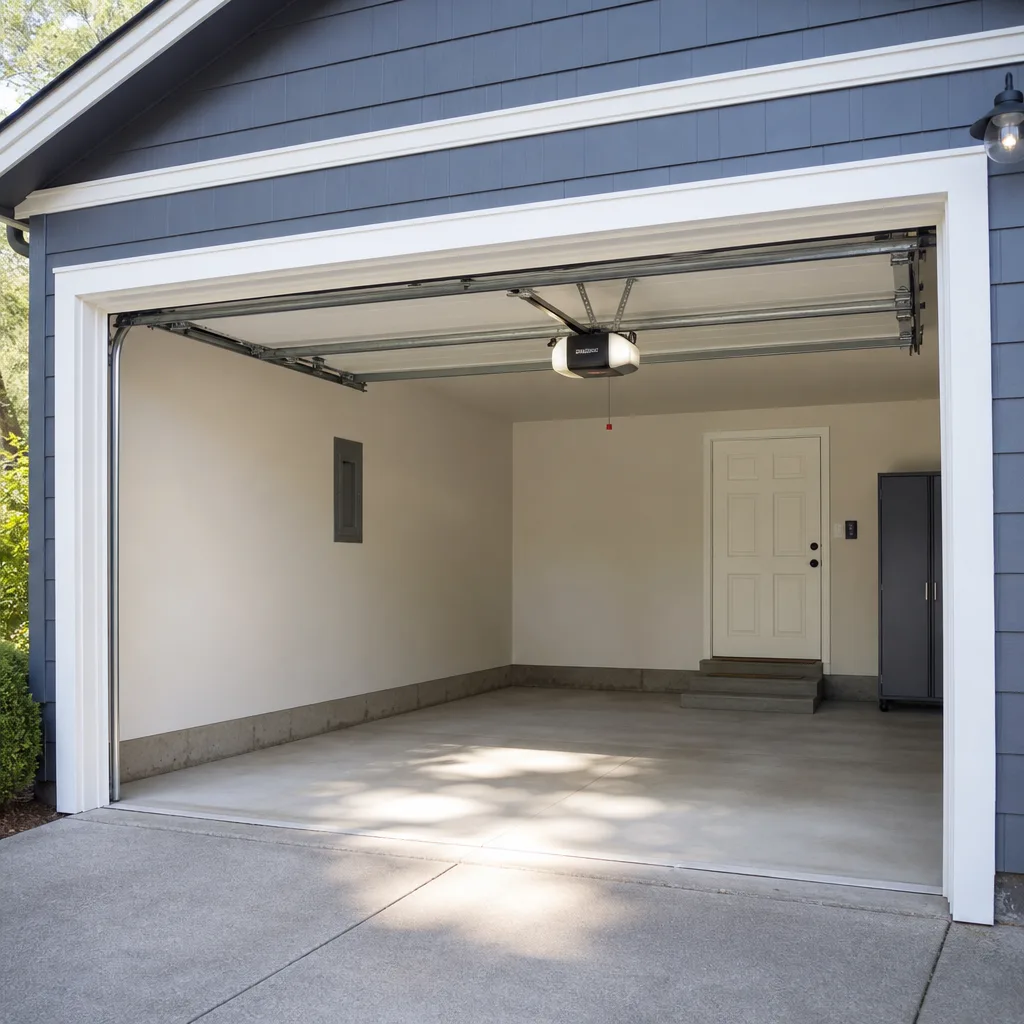
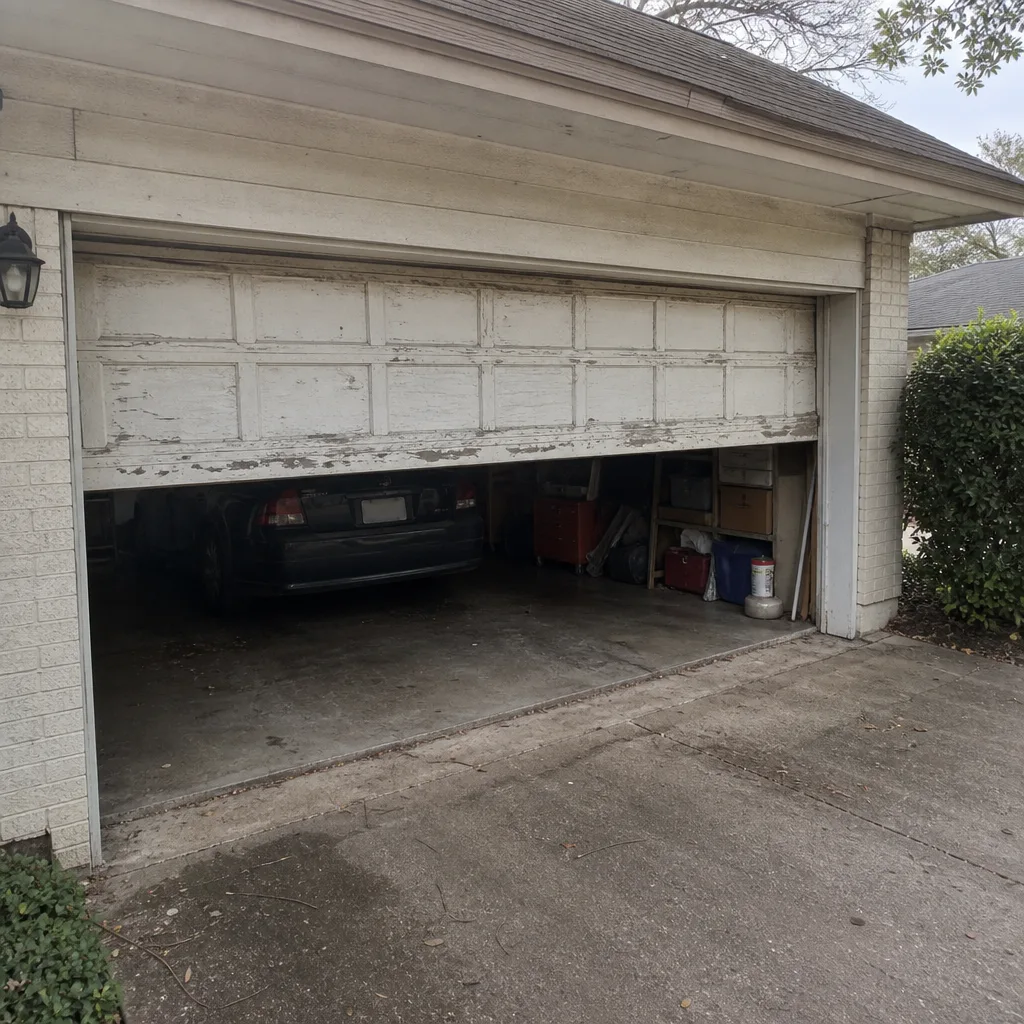 Before
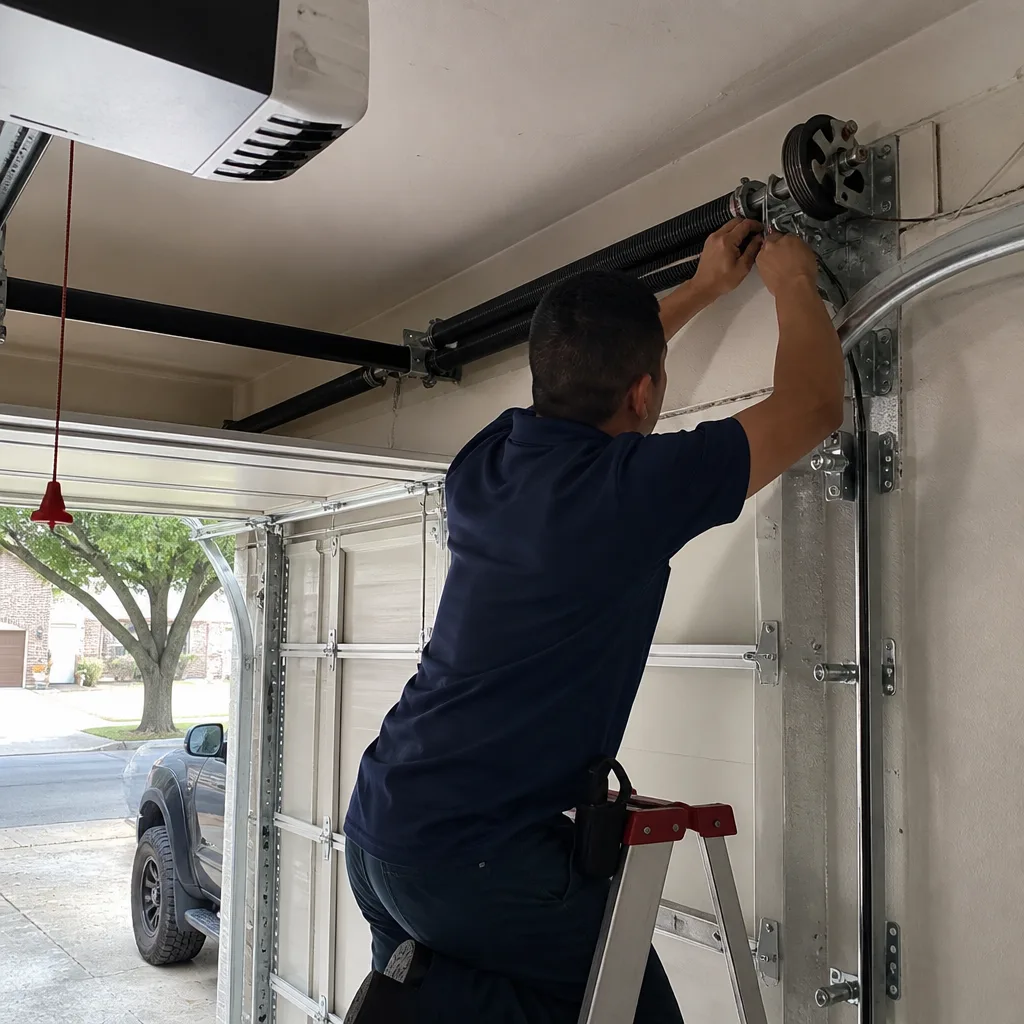 After
After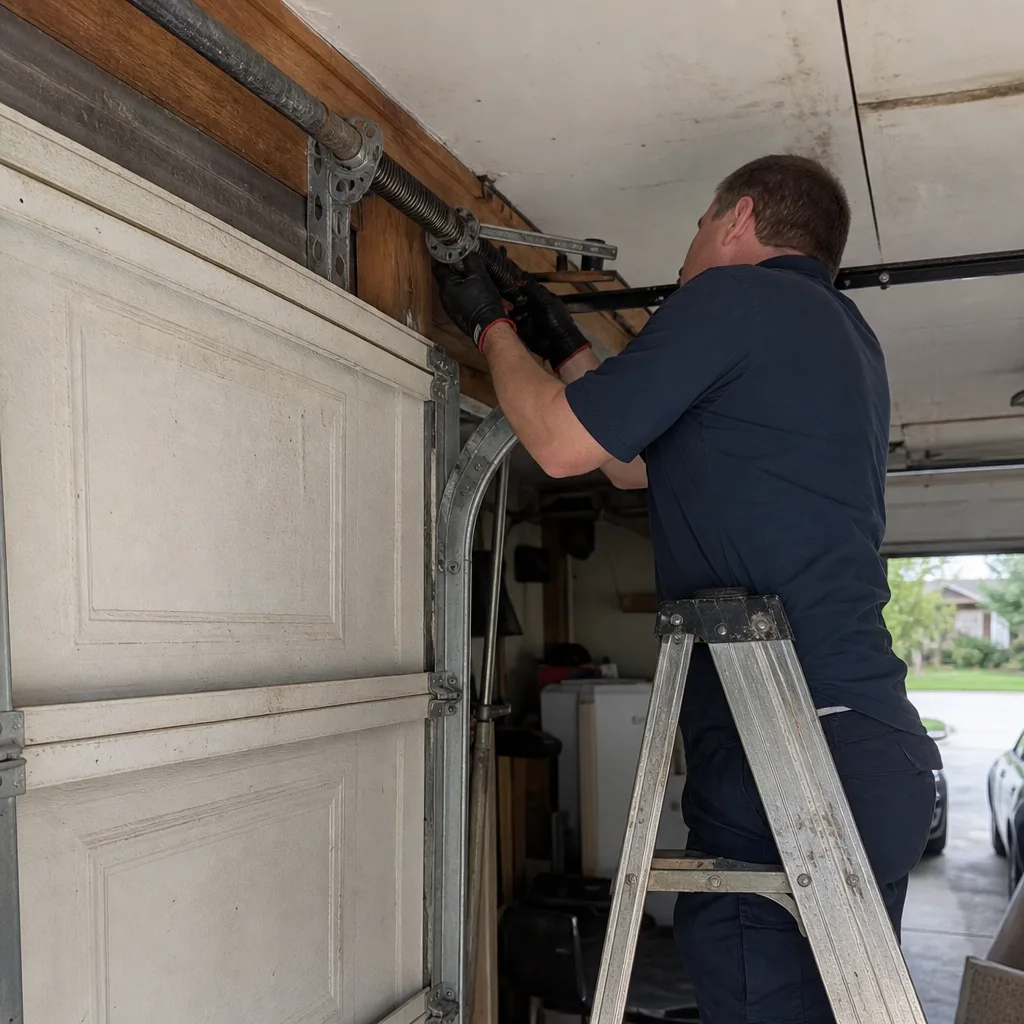 Before
 After
After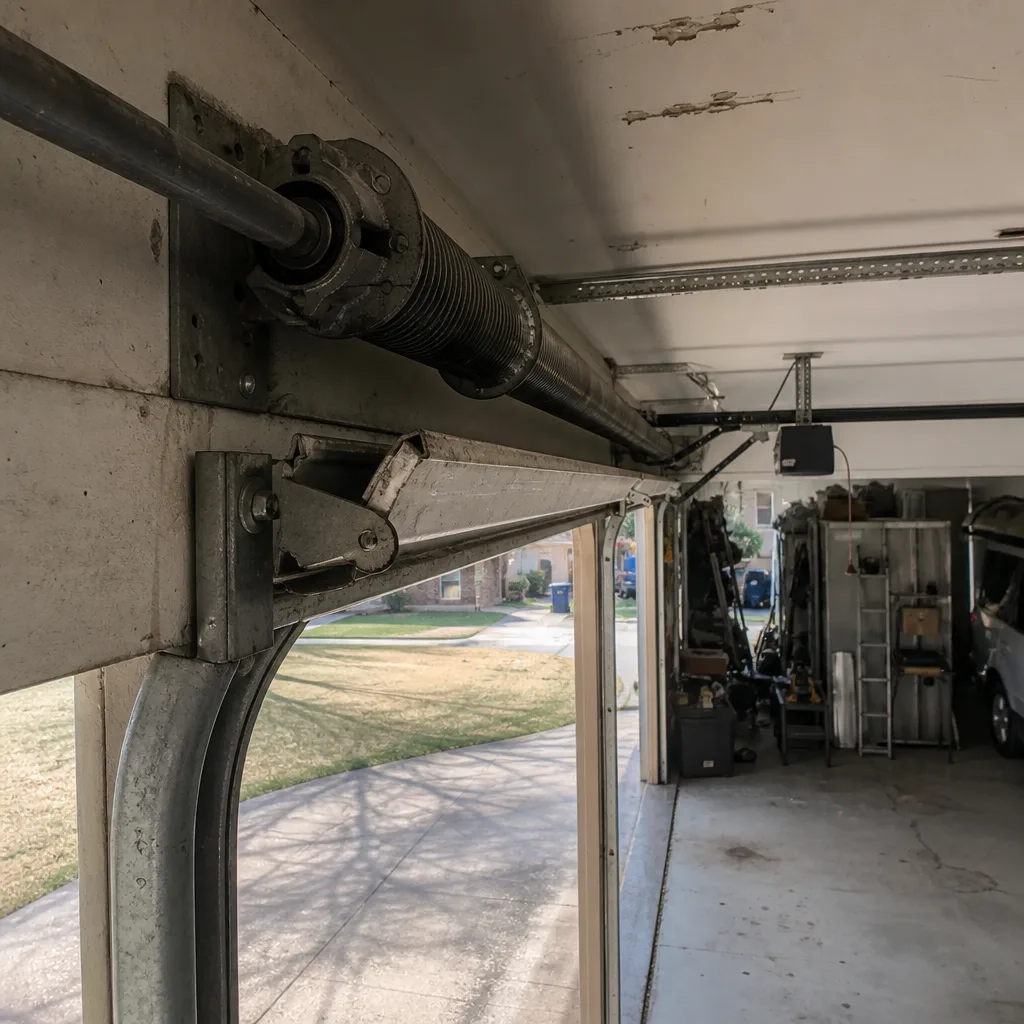 Before
 After
AfterGarage Door Warning Signs: A Mesquite Homeowner’s Reference Guide
A garage door spring doesn’t just snap one day. It gives you three to five specific warning signs over weeks or months before it fails, and most homeowners in Mesquite have seen at least two of them without knowing what they meant. Maybe you’ve heard a pop from the garage at night and shrugged it off. Maybe the door felt heavier last Tuesday than it did in March. Those are messages from a 200-pound door riding on two springs, and ignoring them is how a $150 spring replacement turns into a $1,200 emergency call with your car trapped inside the garage. This guide walks you through every warning sign that matters in North Texas, what each one means, and how to check your door before it checks out on you. For a broader look at maintenance and repair, see The Complete Guide to Garage Door in Mesquite.
Quick Answer
The most common garage door warning signs in Mesquite are a door that feels heavier when you lift it by hand, a loud bang or pop from the spring area, visible rust or gaps in the coils, cables that look frayed or loose, and an opener that hesitates, reverses, or strains. Any one of these means a component is failing right now. If you see two or more, the door could drop without warning. Call a pro before you park under it.
Table of Contents
- The Difference Between a Normal Sound and a Failing One
- Visual Signs North Texas Homeowners Should Actually Look For
- What Your Opener Is Telling You When It Hesitates, Reverses, or Strains
- The Mesquite Warning Sign Everyone Blames on Humidity
- The 30-Second Test That Catches a Failing Spring Before It Breaks
- What Spring Replacement Actually Costs in Mesquite
- Common Mistakes to Avoid
- When to Call a Professional
- Frequently Asked Questions
The Difference Between a Normal Sound and a Failing One
Every garage door makes noise. That’s not the problem. The problem is that most Mesquite homeowners can’t tell the difference between the normal rumble of a working door and the specific sounds that mean a component is about to give up. After two decades of listening to garage doors in this county, we can tell you what each sound means without even looking at the door.
A healthy garage door makes a low, consistent rumble or hum. You should hear the opener motor running steadily, the rollers moving smoothly along the track, and maybe a soft thump when the door settles into the closed position. That’s it. No pops. No grinding. No screeching that makes you wince.
Here’s what the warning sounds actually are:
The Pop
If you hear a sharp pop, like someone tapping a metal pipe with a hammer, that’s a spring coil cracking. It’s not the spring fully breaking yet. Torsion springs are wound tight with thousands of pounds of tension, and when one coil starts to fatigue, it pops as the metal separates. You might hear this once or twice over a few weeks. That’s your spring telling you it has days or weeks left, not months. In our experience, a spring that’s popping is a spring that’s already lost a coil or two. The remaining coils are carrying extra load, and they’ll follow the same path soon.
The Grinding
Grinding means metal on metal contact where there shouldn’t be any. In a garage door, that’s usually the rollers. Rollers have bearings inside them, and when those bearings wear out, the roller stops spinning and starts dragging along the track. You’ll hear a grinding or gritty sound, especially in the middle of the door’s travel. Left alone, those worn rollers eat into the track itself, and then you’re replacing the track, not just the rollers.
But grinding can also be the opener. If the sound seems to come from the motor unit itself rather than the door panels, the gears inside the opener may be stripping. LiftMaster and Chamberlain openers made in the last fifteen years use plastic gears as a sacrificial part, and when they strip, they grind. The fix is a gear kit, not a new opener, unless you catch it too late.
The Scraping
Scraping is different from grinding. Scraping is usually a door that’s come out of alignment, a track that’s bent, or a panel that’s warped. If you hear a scrape that happens at the same spot in the travel every time, look at that section of the track. In Mesquite, where summer heat can push a door panel past 150 degrees, panels sometimes warp just enough to kiss the track on one side. That scrape is the sound of the door telling you it’s not square anymore.
The Rattling
A rattle that wasn’t there before usually means loose hardware. The nuts and bolts that hold the track brackets, the hinges, and the opener rail all vibrate loose over time, especially when the door cycles twice a day, every day, year after year. A quick tightening fixes the rattle, but don’t ignore it. Loose track brackets are how a door comes off its track and lands on whatever’s under it.
Visual Signs North Texas Homeowners Should Actually Look For
Most garage door warning signs are visible if you know where to look. But you have to know what you’re looking at, and some of the most important signs in Mesquite are things the national chain techs don’t mention because they’re only here long enough to change a part and leave. We live here. We know what our climate does to garage doors.
Rust Patterns on Springs
In Mesquite, the humidity cycling matters more than the total rainfall. We get warm, humid springs, then dry scorching summers, then more humidity in the fall. The garage door spring sits in that cycle year after year. For a full schedule of what to check each season, read our Seasonal Garage Door Care for Mesquite: Year-Round Homeowner’s Guide. What happens is this: moisture condenses on the spring surface during humid nights, the heat bakes it off during the day, and the cycle repeats hundreds of times a year. The result is surface rust that forms in specific patterns, usually at the bottom of the coils where moisture collects and sits.
A little surface discoloration is normal on a spring that’s ten years old. Deep rust that flakes off when you touch it is not. Rust weakens the wire itself, but more importantly, rust on a torsion spring means the spring has been losing its protective coating for years. Once the coating goes, micro-pitting starts in the metal, and those pits are where fatigue cracks start. A rusted spring is a spring that’s already on borrowed time.
Cable Fraying You Can Only See From One Angle
This is the one that catches people. The lift cables on a garage door run along the outside of the track on each side, from the bottom bracket up to the drum at the top. Most homeowners stand in front of the door and look straight at it. From that angle, the cables look fine. But the fraying starts where the cable wraps around the drum at the top, because that’s where the cable bends and unbends every single cycle. You have to stand to the side, look up at the drum, and check the cable where it touches the drum surface.
What you’re looking for is individual wire strands poking out of the cable bundle, or a section where the cable looks flattened or shiny instead of round. If you see either one, don’t open the door again. That cable is carrying the entire tension load when the door moves, and if it snaps while the door is up, the door slams down with nothing to stop it. It’s one of the most dangerous failures a garage door can have.
Gaps or Separation in the Spring Coils
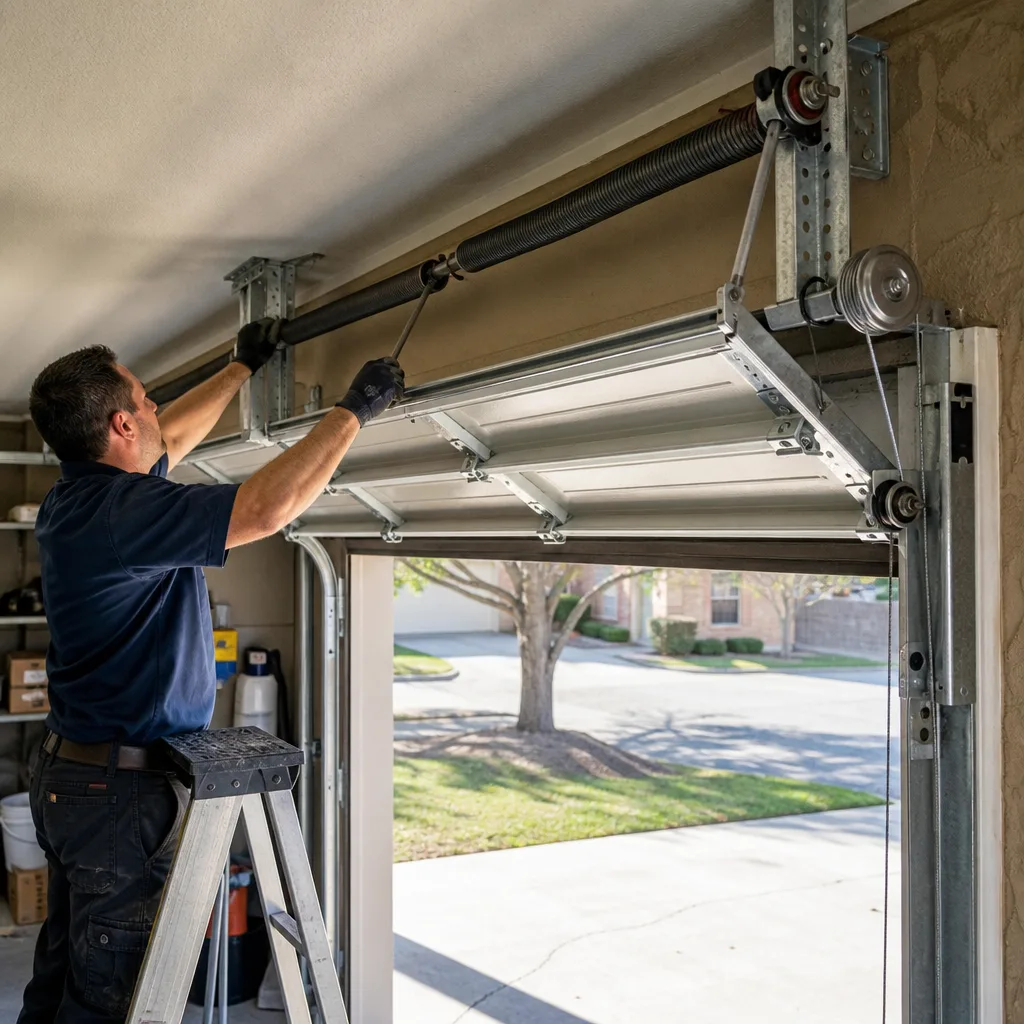
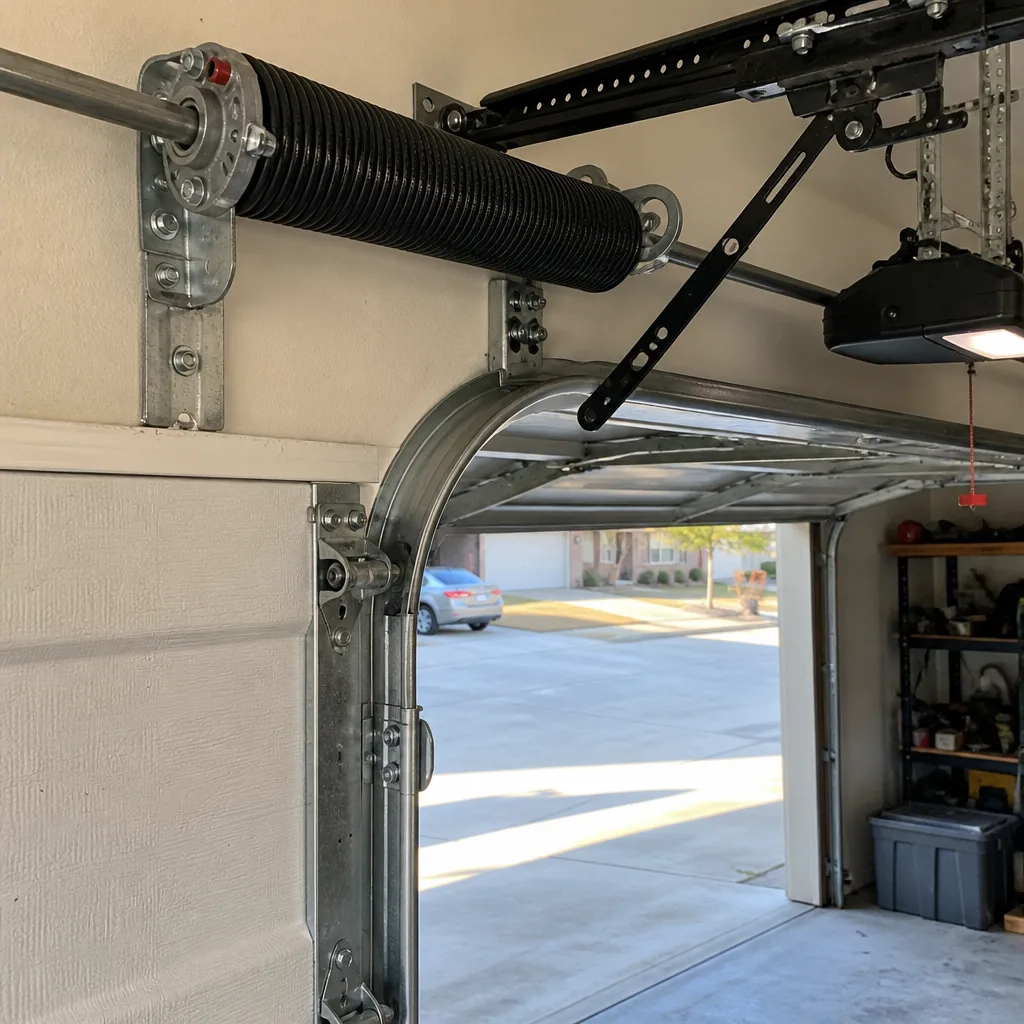
Look at the torsion spring mounted on the wall above your door. On a healthy spring, the coils sit tight against each other with no gaps. If you see a gap that runs all the way around the spring, like someone pulled the coils apart, that spring has fractured. Sometimes you can’t see the break from the ground, so check both sides of each spring. Many Mesquite doors have two springs, one on each side of the center bearing plate, and you need to inspect both.
Panel Warping: Heat Damage vs. Impact Damage
Here’s something specific to North Texas: our summer sun doesn’t just fade your door, it can warp it. If you have a west-facing or south-facing garage door, the afternoon sun hammers it for hours at a stretch. Steel door panels absorb that heat, and the outer skin and inner frame expand at different rates. Over enough summers, the panel develops a permanent bow or wave.
Heat warping looks different from impact warping. Impact damage, like from a car bumper or a kid’s basketball, is usually a dent with a defined shape and a crease around it. Heat warping is a gradual bow across the whole panel, usually with no sharp edges. Heat-warped panels won’t seal against the weather stripping anymore, which lets in hot air, dust, and pests. They also bind against the track when the door moves, which will eventually damage the track itself.
Loose or Uneven Tracks
Stand inside the garage and look up at the vertical track on each side. The gap between the track and the door edge should be even all the way up. If the track is closer to the door at the bottom and wider at the top, or if you can see the track visibly leaning, that’s a problem. The track brackets may have come loose from the wall, or the door itself may be out of balance and leaning to one side as it travels.
What Your Opener Is Telling You When It Hesitates, Reverses, or Strains
If the opener is straining, the problem is almost never the opener. That’s one of the most useful things to understand about garage door systems. The opener is a motor connected to a door. If the door is hard to move, the opener works harder. If the opener is working harder than it was designed to, it starts behaving strangely. Most of the time when a Mesquite homeowner calls about a “bad opener,” what they actually have is a door problem that’s been torturing the opener for months.
Let’s break down the specific opener behaviors and what they actually mean.
Hesitation at the Bottom of the Travel
If the door pauses for a second right after it starts moving up from the fully closed position, then jerks and continues, that hesitation is the opener struggling to overcome the initial resistance. The door is heaviest at the bottom because the springs provide the least help at the fully closed position (on extension spring systems) or are working at maximum twist (on torsion systems). If the springs are weak, the opener has to muscle through that first few inches with raw motor power. That hesitation, that little stutter, is the opener telling you the springs are losing strength.
Reversing Without an Obstruction
Modern openers have a safety system that reverses the door if it hits resistance on the way down. That’s a good thing. But if your door reverses when there’s nothing under it, and the safety sensors are clean and aligned, the most common cause is a door that’s binding against the track. The opener feels the resistance, interprets it as an obstruction, and reverses. Check the tracks for debris, check the rollers for wear, and check the door balance. In Mesquite, where the clay soil shifts with every hot dry summer, doors that were perfectly aligned ten years ago can bind at one point in the travel because the whole garage structure has moved a fraction of an inch.
Running Longer Than Usual
This one’s subtle. Your opener should move the door from fully open to fully closed in a consistent amount of time. If you notice the door seems to take longer now than it used to, or if the motor sounds like it’s laboring through the entire cycle, something is adding resistance. Weak springs are the most likely culprit, but it could also be damaged rollers, a bent track, or a door that’s hanging out of balance. The point is this: the opener didn’t get slower. The door got harder to move, and the opener is losing the fight.
Door Creeps Down After Opening
If the door opens all the way, then slowly creeps down a few inches before the opener catches it, or if it doesn’t stay fully open, the springs are not holding tension. On a properly balanced door, the springs counterbalance the weight so the door stays wherever you put it. Once the springs weaken past a certain point, the door’s weight wins, and it creeps down. This is a red flag, because it means the springs are close to total failure.
The Mesquite Warning Sign Everyone Blames on Humidity
There’s a conversation we have with Mesquite homeowners at least twice a month. The door sticks or binds at a certain point in the travel, and the homeowner has already decided it’s the humidity. “It does this every summer,” they say. “The wood swells up in the heat and it’ll go back to normal in the fall.”
Sometimes that’s right, especially with wooden doors or wooden door frames. Wood does swell in humid weather. But if you have a steel door, which most Mesquite homes do, humidity is not causing that stick. What’s actually happening is that the garage floor and the garage walls have moved, and the door is now rubbing against a track that’s no longer perfectly aligned with the door. The foundation shifts with the soil, the walls follow the foundation, and the track brackets stay bolted to the walls. It’s not the door changing shape. It’s the garage itself moving under the door.
North Texas sits on expansive clay soil. That’s the famous gumbo soil that cracks foundations and shifts slabs. Mesquite gets enough summer heat to dry out the clay and enough spring rain to swell it back up. The result is seasonal movement in the structure of the home itself. A door that “sticks in summer and unsticks in winter” is a door whose tracks are moving with the structure, and the fix is not weather stripping and it’s not WD-40. The fix is a balance adjustment and track realignment that accounts for where the structure actually is now.
Here’s how to tell the difference between a humidity stick and a structural stick. If the door sticks at the same point in the travel every time, regardless of weather, that’s structural. If the door sticks only at the very bottom when it first tries to open after a rain, that might be moisture. But if it’s a steel door, and the stick is at the midpoint of travel, and it’s been doing it every summer for three years, the foundation has moved and the door needs to be balanced to match.
The 30-Second Test That Catches a Failing Spring Before It Breaks
Most garage door failures are predictable weeks in advance if you know how to test the door. Here’s the one test every homeowner should do twice a year, and it takes about thirty seconds. This is not a DIY repair guide. This is a diagnostic test that will tell you if you need to call someone.
Step 1: Pull the Emergency Release
Close the garage door completely. Pull the red emergency release cord hanging from the opener rail. This disconnects the door from the opener carriage. The handle on the cord usually says PULL. Give it a firm pull toward the door. You should feel it release.
Step 2: Lift the Door by Hand
Stand inside the garage, grip the door handle or the bottom edge, and lift. The door should move smoothly with moderate effort. It should not be hard to lift. It should not fly up on its own. It should stay where you leave it at waist height.
Step 3: Stop at Waist Height and Let Go
This is the tell. Lift the door to about waist height, or roughly three to four feet off the ground, and slowly release your grip. Stand clear. A properly balanced door will stay at that height, maybe drift an inch or two. A door with weak springs will either drop quickly or stay up briefly and then fall. If the door drops, the springs are failing and the opener has been doing the springs’ job, which means the opener is also wearing out faster than it should.
Step 4: Lower the Door Gently and Reconnect
Lower the door back to the closed position by hand. Pull the emergency release cord again, or run the opener until the carriage re-engages. Most openers re-engage automatically on the next cycle.
Do this test twice a year, once in spring and once in fall. Write the month on the inside of the garage door frame with a pencil. If the door feels heavier in the fall than it did in the spring, that’s not your imagination. That’s spring fatigue, measurable and real. I count spring cycles the way you count tire miles. This is how you check yours.
What Spring Replacement Actually Costs in Mesquite
When a spring fails, it’s usually one of two scenarios. Either the spring breaks while the door is closed and the car is inside, or it breaks while the door is open and the door slams down. In both cases, the fix is the same: replace the springs. Here’s what that costs in the Mesquite market, based on the jobs we quote every week.
| Repair Type | Typical Cost Range in Mesquite | What’s Included |
|---|---|---|
| Single torsion spring replacement | $180 - $280 | Spring, labor, balance check |
| Double torsion spring replacement | $280 - $420 | Both springs (recommended), labor, balance check, lubrication |
| Extension spring replacement | $150 - $250 | Both springs, safety cables, labor |
| Spring replacement + cable replacement | $320 - $500 | Springs, cables, drums checked, full balance |
| Emergency service (nights, weekends) | Add $50 - $100 | Same visit, same repair |
Two things worth knowing about these numbers. First, when one spring breaks, we recommend replacing both. The springs on your door have the same cycle rating, and if one has failed, the other is close. Replacing both now costs less than replacing the second one separately next year. Second, any quote you get over the phone should be locked at that number before anyone arrives. If a company won’t quote a spring replacement range over the phone, that’s a red flag. We quote on the call and hold the number when we get there. You should expect the same from anyone you invite to your driveway. If you’re evaluating contractors, our How to Hire a Garage Door Contractor in Mesquite: A Step-by-Step Guide covers what to ask.
For a full breakdown of what affects pricing, see Garage Door Parts in Mesquite. The short version: spring size, door weight, and whether you need cables or drums replaced at the same time all move the final number.
Common Mistakes to Avoid
- Lubricating a failing spring to “buy time.” If a spring is popping or has visible gaps, no amount of spray lubricant will fix it. You’re buying silence, not time. The spring still fails, only now you won’t hear the warning pops.
- Blaming the opener for every door problem. The opener is the messenger. If the door is heavy, misaligned, or unbalanced, the opener struggles. Replacing the opener without fixing the door means you’ll burn out the new opener too.
- Watching the door close before you drive away. Half the garage door failures in Mesquite happen either right after someone opens the door or right after they close it. Wait five seconds. If something goes wrong, you want to see it happen, not discover it when you get home.
- Pulling the emergency release while the door is open. If your springs are already weak and you pull the release with the door open, the door can drop. The emergency release should only be pulled with the door fully closed, unless you’re in an actual emergency and have no other option.
- Storing valuables directly under an older opener. If your opener is more than ten years old and doesn’t have an automatic reverse sensor, don’t park the car halfway under the door while you “just run inside for a second.” One broken spring and that door takes the shortest route to the floor.
- Assuming a brand-name door means brand-name parts will be cheap. The door might be a Clopay or a Wayne Dalton, but the springs, cables, and rollers are wear items. They fail on a schedule no matter what name is stamped on the panel.
When to Call a Professional
Some things are fixable with a wrench and a can of lubricant. A squeaky hinge, a loose bolt, a sensor that needs cleaning. The things on this page are not. Springs under tension, lift cables, and anything involving the opener’s internal mechanism are dangerous to work on without training. A door is 200 pounds riding on two springs. Respect it.
Call a professional if your door shows any of these signs: a visible gap in a spring coil, frayed cable strands anywhere, a door that drops when you release it at waist height, a grinding sound from the opener unit itself, or a door that reversed without anything under it more than once in a week. Call the same day if you hear a loud bang from the garage and the door won’t open. That’s the spring, and the car isn’t going anywhere until it’s replaced.
Otto’s Garage Door offers free estimates in Mesquite. Call (817) 623-0734, and you’ll talk to a live person, often Otto himself. For more guides & resources, visit our blog. He quotes the job on that call and holds the number when he gets there. No call center, no three-hour arrival window, no price that changes between the phone and the driveway.
Frequently Asked Questions
You’ll typically see or hear one of three things: a sharp popping sound from the spring area, a visible gap in the coil where the spring has separated, or a door that drops when you release it at waist height during the manual test described above. Any one of those means the spring has lost integrity and should be replaced before it breaks. Call (817) 623-0734 for a free estimate, and we’ll tell you exactly what condition your springs are in.
In most Mesquite homes with steel doors, summer sticking means the garage structure has shifted on the expansive clay soil and the tracks are no longer aligned with the door. It’s not the humidity swelling the door; it’s the foundation moving under it. A track realignment and balance adjustment fixes it. If it only sticks after rain and the door is wood, moisture might be the cause, but structural shift is the more common explanation here.
Torsion springs are wound under hundreds of pounds of tension, and the winding process requires specific tools and experience. A mistake can cause serious injury. Extension springs also carry tension and need safety cables installed correctly. This is not a DIY job, and no respectable garage door professional will tell you otherwise. Call a trained technician.
A single torsion spring replacement in Mesquite typically runs $180 to $280, and a double spring replacement runs $280 to $420. The exact number depends on spring size, door weight, and whether cables need replacement at the same time. We quote on the phone call and the number doesn’t change at the door. Call (817) 623-0734 for your exact price.
If the sensor lenses are clean and aligned and the door still reverses, the door is likely binding against the track or the springs are weak. The opener feels the resistance and reverses as a safety response. Check the tracks for bends or debris, then test the door balance manually to see if the springs are weak.
Most residential torsion springs are rated for 10,000 cycles, which translates to roughly seven to ten years for a door opened twice a day. In Mesquite, where garage doors are often used as the front door, the count goes up. If your springs are more than eight years old, or if you’ve lost track of when they were last replaced, it’s worth having them inspected. A spring inspection takes fifteen minutes and costs nothing from us.
Yes. We work on every major brand, including Wayne Dalton, Craftsman, Raynor, LiftMaster, Genie, Clopay, Amarr, and Chamberlain. The crew is trained across all of them, and we carry the common parts for each brand on the truck. Garage Door Opener in Mesquite covers what fits what, and we’re happy to check compatibility on the phone.
The Bottom Line
The garage door on a Mesquite home cycles thousands of times a year, and every component on it has a lifespan measured in cycles, not years. Springs fatigue. Cables fray. Rollers wear. Opener gears strip. The door itself rides on tracks bolted to a structure that sits on moving clay soil. Most of these failures announce themselves weeks in advance if you know what to listen for and where to look. The test is simple: pull the release, lift the door, let go at waist height. If it drops, call before it drops for good.
When you need a door looked at, call (817) 623-0734. You’ll get a live person, a quote that holds, and a written promise on every job: if it’s not done right, we make it right, for ninety days, in writing. We’ve been in this county since 2004, and the name on the van is the name on the license. Otto’s Garage Door home has the address, the license number, and everything else you’d want to check before someone works on your door. If you’re thinking about a new door rather than more repairs, start with Garage Door Installation in Mesquite. It’s cheaper than you might think, and it’s the only way to reset every wear item on the door to zero at once.
Written by Otto Reinhardt, Owner at Otto’s Garage Door, serving Mesquite since 2004.