

Last updated September 10, 2026
Full 25-point door and opener safety check with every visit - springs, cables, rollers, tracks, and your LiftMaster or Chamberlain opener included
You get a price before we start. It does not change when the truck arrives.

 Before
 After
After Before
 After
After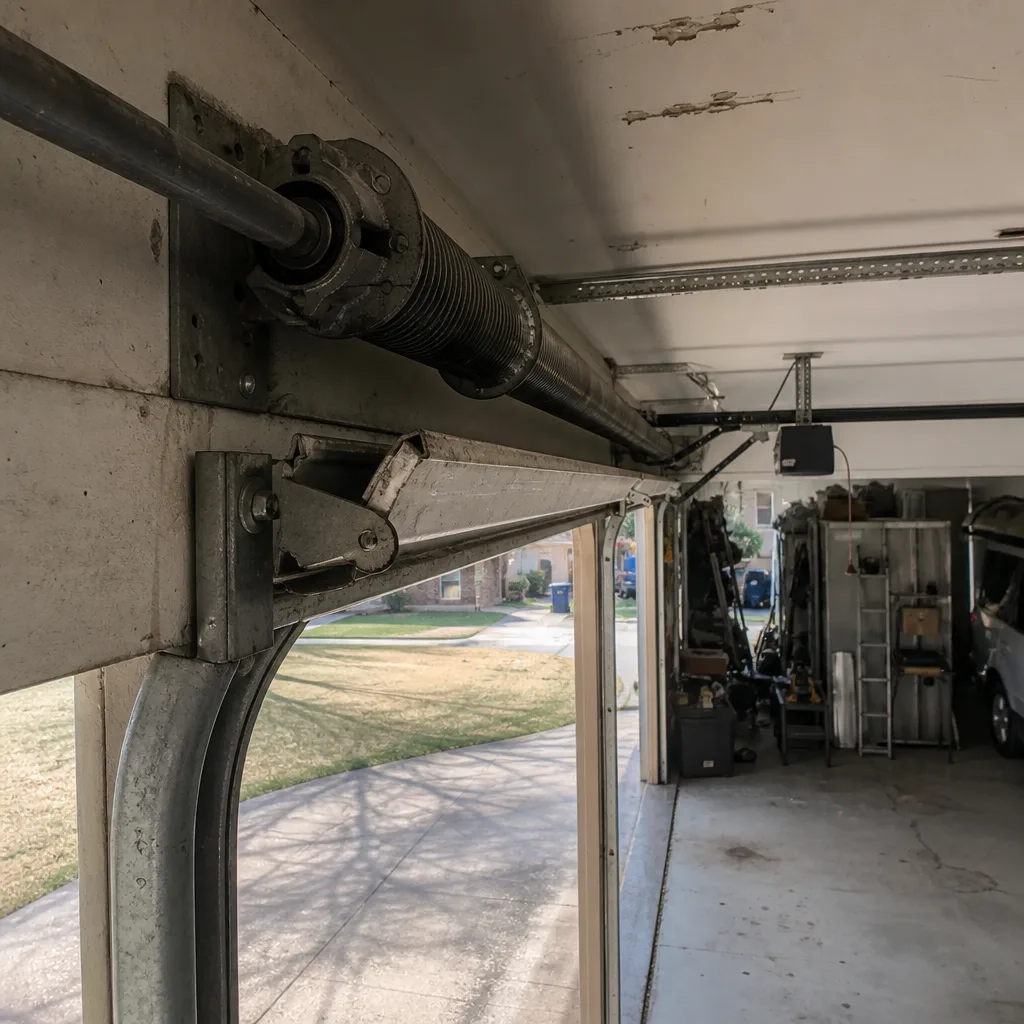 Before
 After
AfterSeasonal Garage Door Care for Mesquite: Year-Round Homeowner’s Guide
The February 2021 freeze took out more garage door springs and cables in North Texas than the prior five years combined. We know because we were out there at nine at night, in the ice, pulling broken spring ends out of jammed tracks from Mesquite to Sunnyvale. Most of those failures weren’t caused by the cold itself. They were caused by neglect: springs that hadn’t been inspected since before COVID, cables that had rusted quietly for three years, and openers whose force settings had been cranked to the max to fight doors that hadn’t rolled smoothly in months. This guide maps garage door maintenance to Mesquite’s actual calendar, not some generic four-seasons template someone wrote in Ohio. You’ll learn what to check, when to check it, and what actually fails here.
Quick Answer
In Mesquite, the realistic garage door maintenance calendar has two critical windows: mid-March through April and mid-October through mid-November. That’s when you inspect springs, cables, rollers, weather seals, and opener force settings before the extremes of summer heat and winter ice hit. A thorough DIY seasonal check takes about 30 minutes, but anything involving torsion springs, cables under tension, or opener motor diagnosis should go to a trained pro. One caveat before we go further: high-tension springs and cables store enough energy to seriously injure or kill. Never remove, adjust, or loosen them yourself. Inspect visually, then call someone whose name is on the license.
Table of Contents
- The Mesquite Calendar: Why Four-Season Advice Fails Here
- Spring (March-April): Post-Winter Contraction Checklist
- Summer (May-September): Thermal Expansion and Heat Management
- Fall (October-November): The Pre-Freeze Prep That Saves You $300+
- Winter (December-February): Freeze Response and Post-Freeze Inspection
- Hail, Thunderstorms, and Your Door Skin: What Mesquite Weather Does
- Common Mistakes to Avoid
- When to Call a Professional
- Frequently Asked Questions
- The Bottom Line
The Mesquite Calendar: Why Four-Season Advice Fails Here
Mesquite doesn’t have four equal seasons. It has a brutal summer that runs from late May into September, a deceptively destructive ice-storm window from December through February, and two short shoulder seasons in between where all the real maintenance should happen. Generic maintenance articles tell you to “inspect your garage door each spring and fall.” That’s the right instinct, but the timing here is different than in, say, Chicago or Atlanta.
In Mesquite, spring actually starts in late February most years. By mid-March, daytime highs are regularly in the 70s and the ground has thawed. That’s your first maintenance window. The second comes in mid-October, right before the first serious cold front. By Thanksgiving, we’ve usually had at least one night in the 30s. By early December, ice is a genuine risk.
What this means practically: if you only do two maintenance checks per year, do them in early April and late October. Both take under an hour. Both catch problems when they’re cheap to fix rather than when your door is frozen shut and your vehicle is trapped inside. We’ve been doing this in Mesquite since 2004, and we can tell you with certainty: the homeowner who spends 30 minutes in October almost never pays for a January emergency repair.
- First window: March 15-April 15 (post-winter contraction checks)
- Second window: October 15-November 15 (pre-freeze lubrication and seal work)
- Summer: Passive monitoring plus opener force/direction checks in June and August
- Winter: Emergency response protocol plus post-freeze inspection
If this all feels like more than you want to take on, that’s fine. Most homeowners call us for a seasonal tune-up and let our crew handle the details. But even a quick visual check from a stepladder beats discovering a snapped spring on the first 20-degree morning in January.
Spring (March-April): Post-Winter Contraction Checklist
Spring is when Mesquite homeowners discover what the winter’s freeze-thaw cycles actually did to their garage door components. Cold contracts metal. Ice forces seals against the floor and panel joints. And moisture from those winter rain events works its way into every unpainted surface. By March, the damage is done and now it’s showing. Here’s the step-by-step inspection sequence we recommend, in order of importance and danger level.
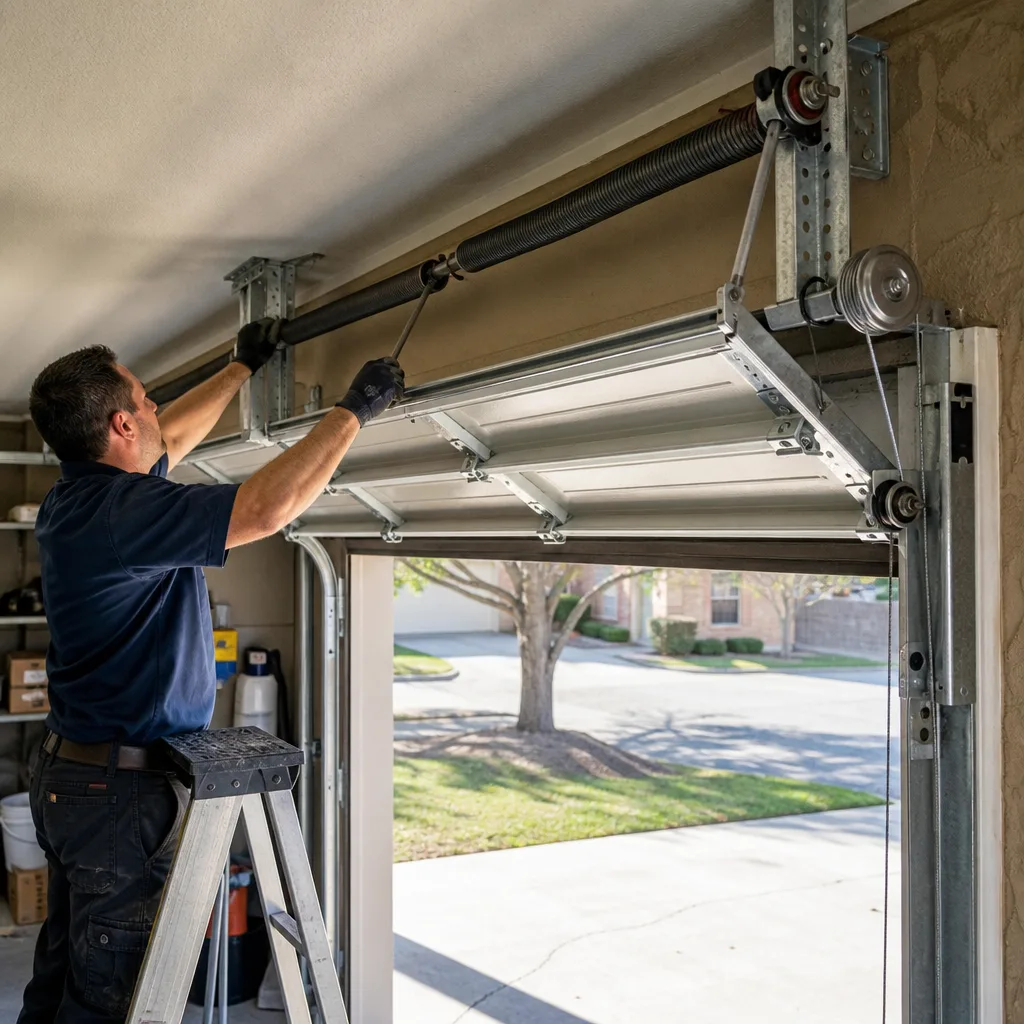
- Check the cable tension visually. Stand inside the garage with the door closed and look at both lift cables (the twisted steel wires running up each side). Both should be taut and seated in the drum grooves. If one is slack, frayed, or sitting outside the groove, do not operate the door. A slack cable means spring tension is uneven, which is a spring problem, and springs are not a DIY item. Call a pro. We see more cable failures in March than any other month because winter contraction created micro-frays that suddenly propagate under spring load.
- Inspect the bottom seal (astragal). Run your hand along the rubber strip at the bottom of the door while it’s open. Look for cracks, flattening, and gaps where daylight shows through. A compromised bottom seal lets cold air in during winter, but it also lets in dust, crickets, and the occasional snake during Mesquite’s summer. Bottom seals cost $20-$40 and take about 15 minutes to replace. We stock them on every truck. Garage Door Parts in Mesquite has the full breakdown of what wears out and when.
- Test the opener’s auto-reverse force setting. This is the big one most people skip. During winter, many homeowners manually increase the opener’s down-force setting to get a door that’s fighting a frozen or stiff seal to close. Then spring comes, the door moves freely again, but the opener is still cranked too high. Result: the door closes harder than it needs to, and the auto-reverse safety feature may not trigger when it should. Test it now. Place a 2×4 flat on the ground under the door and close it. The door should reverse within two seconds of contacting the wood. If it doesn’t, reduce the force setting. The operator’s manual shows how, usually a small dial or digital menu on the unit. If you’re not comfortable adjusting it, that’s a five-minute fix for us.
- Lubricate the rollers, hinges, and tracks. Use a garage door-specific lubricant, not WD-40 (it’s a solvent, not a lubricant). Spray the roller ball bearings, the hinge pivot points, and the torsion spring itself. Wipe excess with a rag. You’re not bathing the door in oil; you’re putting a light film on moving metal surfaces.
- Check the weather stripping around the sides and top. In Mesquite, this stuff bakes in summer and freezes in winter. By spring, it’s often cracked or pulling away from the jamb. Replace it if it’s brittle. Side and top seals keep dust out, and in our climate, dust is a year-round enemy of opener motors and sensors.
Spring is also the right time to check your Garage Door Opener in Mesquite for any error codes or odd behaviors. If the opener whines, grinds, or hesitates after a cold winter, that’s not normal. It’s a sign of a failing gear or a strained motor. Catch it now, before summer heat adds another stressor.
Summer (May-September): Thermal Expansion and Heat Management
Mesquite summers are hard on every part of a garage door system, but the two biggest issues we see are thermal expansion on steel doors and opener motor overheating. Both are preventable if you understand the mechanics.
Steel expands when it heats. A dark-colored metal garage door facing west in Mesquite can reach 140 degrees on a July afternoon. That expansion changes the clearances between the door and its track. If the door was installed or adjusted when ambient temps were mild, the expanded metal can bind against the rails, making the opener work harder. The fix is usually minor track adjustment, but doing that safely requires the door to be properly balanced. The practical move is simple: if your door starts binding, rubbing, or making new scraping noises in June, don’t keep running it. The opener motor is burning through its thermal protection every cycle, and repeated overheating kills motors fast.
Also check the torsion spring balance in early summer. Here’s how: release the opener (pull the red release handle) and manually lift the door to about waist height. It should stay there, neither rising nor falling. If it drops, the springs are losing tension and the opener is doing too much work. If it rises, the springs are too tight. Both are spring issues that affect balance and opener lifespan. Call a professional to recheck spring cycles. We count spring cycles the way you count tire miles. A typical 10,000-cycle spring installed in 2015 is at end-of-life by 2024 or 2025, and we can tell you what’s left on yours.
One more summer-specific item: the sensors. Dust and pollen from Mesquite’s summer windstorms coat the photo-eye sensors at the bottom of the door tracks. A dirty sensor can cause intermittent reversal, where the door stops and goes back up for no apparent reason. Clean both lenses with a dry cloth monthly during summer. If the problem persists, it’s usually a misalignment or a wiring issue, not the sensor itself.
If you’re considering a new door because your current one is warping, cracking, or losing its finish under the Texas sun, now is the time to plan the replacement for fall. Garage Door Installation in Mesquite is most predictable when temps are mild and we can schedule around the weather.
Fall (October-November): The Pre-Freeze Prep That Saves You $300+
Fall is the most important maintenance season in Mesquite, and October is the sweet spot. The work you do now is five times cheaper and ten times easier than the same repair during a January ice event. When your door freezes shut at 6:30 a.m. and your car is trapped inside, you’re not negotiating. You’re paying emergency rates, and parts are scarce. The same bottom seal replacement that costs $35 in October becomes a $200 emergency call in January if you factor in the frozen-door service, the after-hours rate, and the opener damage that happens when the motor burns out fighting a frozen seal.
Here’s the pre-freeze checklist we recommend for every Mesquite homeowner:
- Lubricate everything that moves. Hit the rollers, hinges, torsion spring, and the lock mechanism (if you have one). Use a garage door-specific silicone or lithium-based lubricant. The specific lubrication points that freeze up first are the rollers’ ball bearings (moisture infiltrates, then freezes) and the hinge pins. A light coat in October prevents most frozen-roller problems in January.
- Replace the bottom seal if it shows any cracks. This is the single highest-value October investment. The bottom seal is the first line of defense against freeze adhesion. When ice forms between a cracked seal and the concrete floor, the door bonds to the ground. The opener then either strips its own gear trying to lift it, or the springs take the shock and fail. A new seal is flexible and resists that bond. Garage Door Parts in Mesquite covers which seals fit which door profiles if you want to tackle it yourself.
- Check the balance again. You did it in spring. Do it again in fall. Springs lose tension gradually, and a door that was balanced in April may be off by November. If it’s off, call us. A correctly balanced door is the difference between a spring lasting 10,000 cycles and one failing at 6,000.
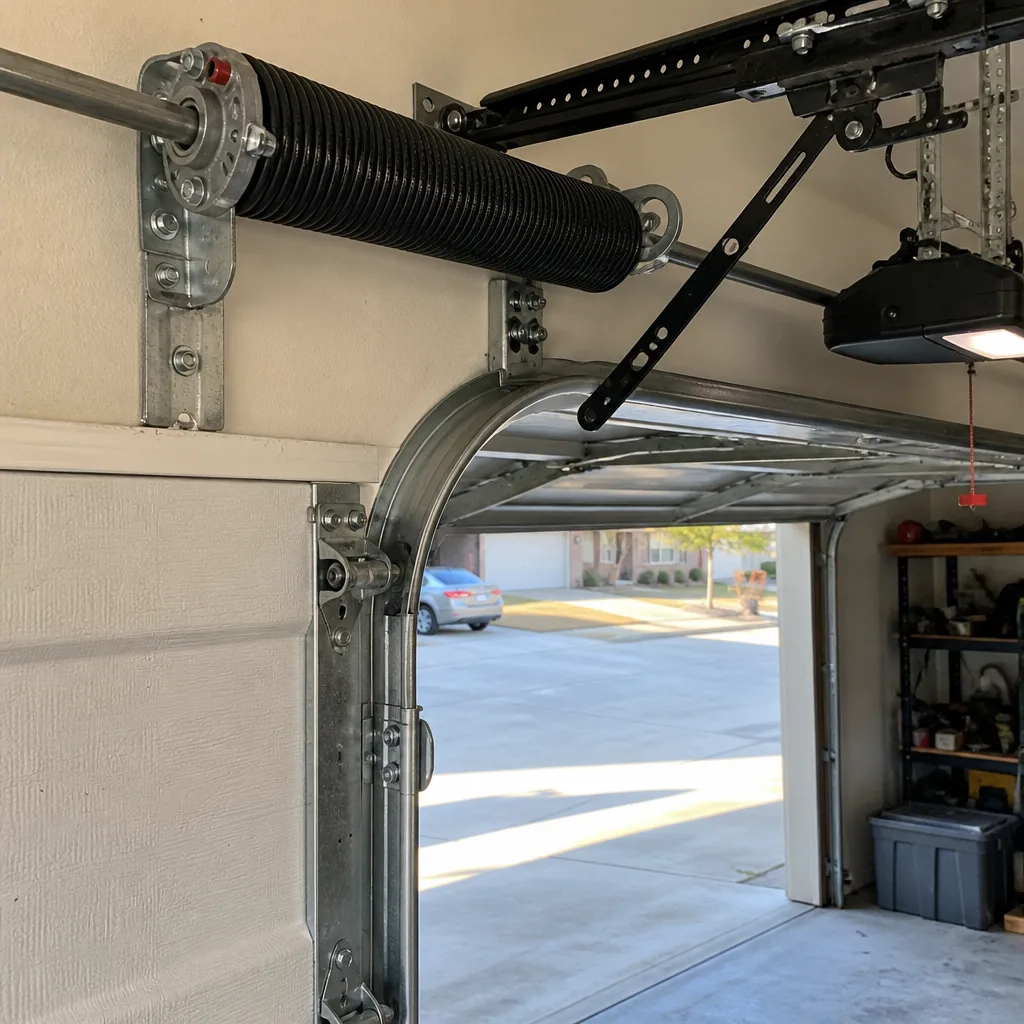
- Inspect the springs and cables for rust or fraying. Look closely. Rust on a torsion spring isn’t always fatal, but rust plus visible gaps in the coil or a “shiny spot” that looks different from the surrounding metal is a warning sign. Frayed cables are always urgent. If you see even one broken wire sticking out of a cable bundle, that cable is done. Do not operate the door. Call us. We carry springs and cables for Amarr, Wayne Dalton, Raynor, and all major brands on the truck.
- Test the auto-reverse again. After a summer of heat cycling, force settings can drift. Test with the 2×4 method. Five minutes now prevents a crushed or injured person later.
- Adjust the door’s travel limits if needed. If the door doesn’t close fully or closes then rebounds an inch, the settings need a small correction. This is a straightforward adjustment on most openers, but do it now, not when it’s 28 degrees outside.
One thing Mesquite homeowners often forget: the garage door opener’s battery backup, if it has one, should be tested in fall too. We lost power during the 2021 freeze for days in some neighborhoods. A battery backup that hasn’t been cycled in two years is a dead battery. Run it once in October. If the door moves weakly or not at all on battery, that battery is done. Most units use a 12V sealed lead-acid or lithium pack that costs $60-$120 to replace.
Winter (December-February): Freeze Response and Post-Freeze Inspection
Winter in Mesquite is a different beast than what people from Minnesota imagine. Our winters are wet-cold, not dry-cold. That means freeze-thaw cycles, ice bonding, and the kind of moisture that works into every seal and bearing. Here’s what to do when the door freezes shut, and what to check after every freeze event.
What to do when your door freezes shut: First, and this is critical, do not run the opener against a frozen seal. Running the opener when the door is bonded to the ground by ice is the #1 cause of stripped opener gears and burned-out motors we see every winter. The opener doesn’t know the door is stuck. It just pushes until something gives, and what gives is either the gear inside the opener or the spring assembly, both of which are expensive. Instead, break the ice bond manually. Use a rubber mallet to tap lightly along the bottom seal, working from one side to the other. Then chip any visible ice from the ground in front of the door. If the door still won’t lift by hand, the seal itself may be frozen solid to the concrete. Warm it with a hair dryer or a heat gun held at low setting for a few minutes. Then lift by hand, not with the opener. Once it’s moving freely, you can reconnect the opener.
After every freeze event, inspect in this order:
- Check the cables. Cold makes metal brittle. A cable that was fine in October can develop a fray during a hard freeze. Look at both sides carefully. Don’t operate the door if you see a problem. Cables are under spring tension at all times.
- Check the opener’s force setting. Did you or someone else crank it during the freeze to get the door to close? If so, reset it to the recommended setting after the thaw. A door that closes with too much force is a safety hazard, and it also accelerates wear on every component.
- Check for ice inside the tracks. Water runs down the tracks and freezes overnight. Chip out any visible ice with a screwdriver, then wipe the tracks dry. The opener will thank you.
- Check the auto-reverse again. After any really hard freeze, test it. The cold can temporarily affect sensor performance and motor speed. Five minutes. Do it.
- Listen. Run the door through a full cycle. New noises, grinding, or hesitation after a freeze event are red flags. A new noise means something changed.
We were out at nine at night during the 2021 freeze, in neighborhoods from Mesquite to Forney, replacing springs that had been neglected for years but chose that week to fail. The common thread in almost every case: the homeowner hadn’t had a tune-up in three or more years, and the spring had been running on borrowed time for months. Winter doesn’t break healthy doors. It breaks doors that were already compromised.
Hail, Thunderstorms, and Your Door Skin: What Mesquite Weather Does
North Texas hail isn’t a rare event. It’s a recurring fact of life. Mesquite sits in the middle of a hail corridor that regularly produces golf-ball and sometimes baseball-sized stones. The damage to a garage door happens in two stages, and the second stage is the one that matters.
The first stage is obvious: dents. A severe storm can pepper a steel door with thirty or forty visible dents in a minute. They’re ugly, but they’re not structural. The second stage is what we see in the months after a storm: the dents that dented the panel’s internal ribs, not just its face. Modern steel doors are built with internal bracing. When a hailstone hits hard enough to deform that bracing, the panel loses rigidity. It won’t be obvious on day one. But over the next months, you’ll notice the panel flexing when the door moves, or the door not seating flush in the closed position. That’s the structural compromise. It’s not cosmetic anymore.
After any hail event in Mesquite, the check we recommend is simple: run the door up and down a few times. Look at each panel from the inside while it moves. If a panel flexes, wobbles, or doesn’t move as one solid piece, it’s compromised. The fix is usually panel replacement, not whole-door replacement, unless the door is older or the damage is widespread.
One more weather-related item: wind. Mesquite gets serious straight-line winds with spring thunderstorms and the occasional tornado warning. A garage door is the largest opening in most homes’ exterior. If it gets blown in or knocked off its tracks, the entire roof structure can be compromised. If your door rattles or shakes visibly during high winds, check the roller-to-track clearance and the track mounting bolts. Loose tracks aren’t just noisy; they’re a structural weak point. We’ve seen doors pulled off their tracks entirely during straight-line wind events because the track bolts had backed out over years and nobody noticed.
If you’re replacing a hail-damaged door, consider an insulated model. The energy difference in a Mesquite summer is significant, and the structural stiffness of an insulated panel is much higher than a non-insulated one. Garage Door Installation in Mesquite covers the options and what we recommend for this climate.
Common Mistakes to Avoid
- Running the opener against a frozen door. This is the single most expensive mistake Mesquite homeowners make every winter. The opener’s motor doesn’t know the door is frozen. It just pushes until something breaks, usually the gear inside the opener or the spring. Break the ice manually first, then lift by hand, then use the opener.
- Lubricating with WD-40. WD-40 is a water-displacement spray and a mild solvent. It’s not a lasting lubricant, and it actually washes away the lubricant that was already there. Use a garage door-specific silicone or lithium spray. The difference matters.
- Ignoring a slow or straining opener. If the door used to open in 10 seconds and now takes 15, the opener is working harder. That extra load is coming from somewhere: unbalanced springs, tight rollers, or a failing motor. Ignore it and one day it simply won’t open.
- Adjusting torsion springs themselves. Torsion springs hold hundreds of pounds of torque. A spring that lets go while you’re working on it can break bones or worse. This is not a “YouTube and save $50” situation. Call a pro. Every year we hear about a homeowner who tried and ended up in the ER.
- Replacing only one spring when both are the same age. Spring cycles are consumed at the same rate. If one fails, the other is right behind it. Replacing only the failed one means you’ll be back in a few months when the other snaps. Replace both. It’s not upselling; it’s how springs work.
- Painting over rust without treating it. If you see rust on the door bottom or on hardware, scrubbing it off and slapping on paint traps moisture underneath and makes the problem worse. Treat first, then paint. And if the rust is on a spring or cable, replace the part. Rusted high-tension hardware is ticking clock.
- Forgetting the battery backup test. Push the test button on your opener’s battery backup once a season. If the light doesn’t come on or the door won’t run a full cycle on battery, replace the battery. Power outages happen here, and during the 2021 freeze, some Mesquite homes were without power for four days.
When to Call a Professional
Call a professional when the problem involves anything under spring tension: torsion springs, extension springs, cables, and the drums they ride on. Call when the door is off its tracks, when a panel is structurally compromised, when the opener motor is making new noises, or when you’ve done the DIY checks and something still doesn’t feel right. The line is clear: visual inspection is DIY. Anything involving tools on tensioned hardware is not. Otto’s Garage Door offers free estimates in Mesquite, and we quote on the phone and hold that number at the door. Call (817) 623-0734. If it’s nine at night and a spring lets go, a live person answers. Often it’s Otto himself.
Frequently Asked Questions
A basic seasonal tune-up in Mesquite typically runs $85-$150, including lubrication, balance check, force-setting adjustment, visual inspection, and a written report on spring and cable condition. That’s the cost of preventive care. By contrast, an emergency spring replacement during a winter freeze runs $250-$450 depending on the spring type and door size. The math is simple. Call (817) 623-0734 for an exact quote; estimates are free and the price is agreed before any work starts.
Frozen seals causing the opener to strip its gear or burn its motor. The door freezes to the concrete, the homeowner hits the opener button, and the motor destroys itself trying to lift a door that’s anchored in ice. The fix is always cheaper than the motor: break the ice manually, warm the seal, and lift by hand first. If the motor is already burned, we can replace the opener same day in most cases.
About 70% of seasonal garage door maintenance is DIY-friendly: lubrication, visual inspection, seal replacement, sensor cleaning, and auto-reverse testing. The other 30%, specifically anything involving springs, cables, or track realignment, needs a trained technician. Torsion springs are under enough tension to kill. The rule is simple: if it’s inspection and cleaning, DIY. If it’s adjustment and repair on tensioned components, call us.
Once a year. Ideally, schedule it in early October, right before the freeze risk arrives. Homes with older doors, doors that see many open-close cycles daily, or doors that have survived hail events may need twice-yearly service. We recommend annual at minimum, and fall is the strategic time for this climate.
Yes. Dents that deform the panel’s internal bracing compromise the door’s structural rigidity. A door that’s lost its stiffness doesn’t seat properly, puts uneven load on the tracks and springs, and is more vulnerable to wind damage during the next storm. If you can see the panel flexing when the door moves, it’s structural, not cosmetic. Insurance often covers hail damage to garage doors, so file the claim promptly.
Most residential torsion springs in this region last 7-12 years with once-yearly lubrication and proper door balance. The average is around 10,000 cycles, which translates to roughly 9-10 years of normal use. Mesquite’s summer heat accelerates metal fatigue slightly, and the winter freeze-thaw cycles add another stressor. If your springs are over 8 years old and you haven’t had them inspected lately, add that to your October checklist.
The Bottom Line
Mesquite’s garage door calendar has two non-negotiable maintenance windows: early spring and late fall. Do 30 minutes of inspection, lubrication, and seal work in each of those windows, and you’ll catch 90% of problems before they become emergencies. Winter doesn’t break healthy doors; it exposes neglected ones. Summer heat doesn’t destroy openers; neglected balance and dirty sensors do. And hail doesn’t just dent; it compromises structure. The pattern is consistent: small maintenance now prevents expensive repair later. If you want someone else to handle the checks, or if you just want a second opinion on what your door needs, call Otto’s Garage Door at (817) 623-0734. We’re in Mesquite, we answer the phone, and the quote we give you on that call is the price you pay. That’s not a policy; it’s just how it’s been done since 2004.
Written by Otto Reinhardt, Owner at Otto’s Garage Door, serving Mesquite since 2004.