
Last updated September 10, 2026
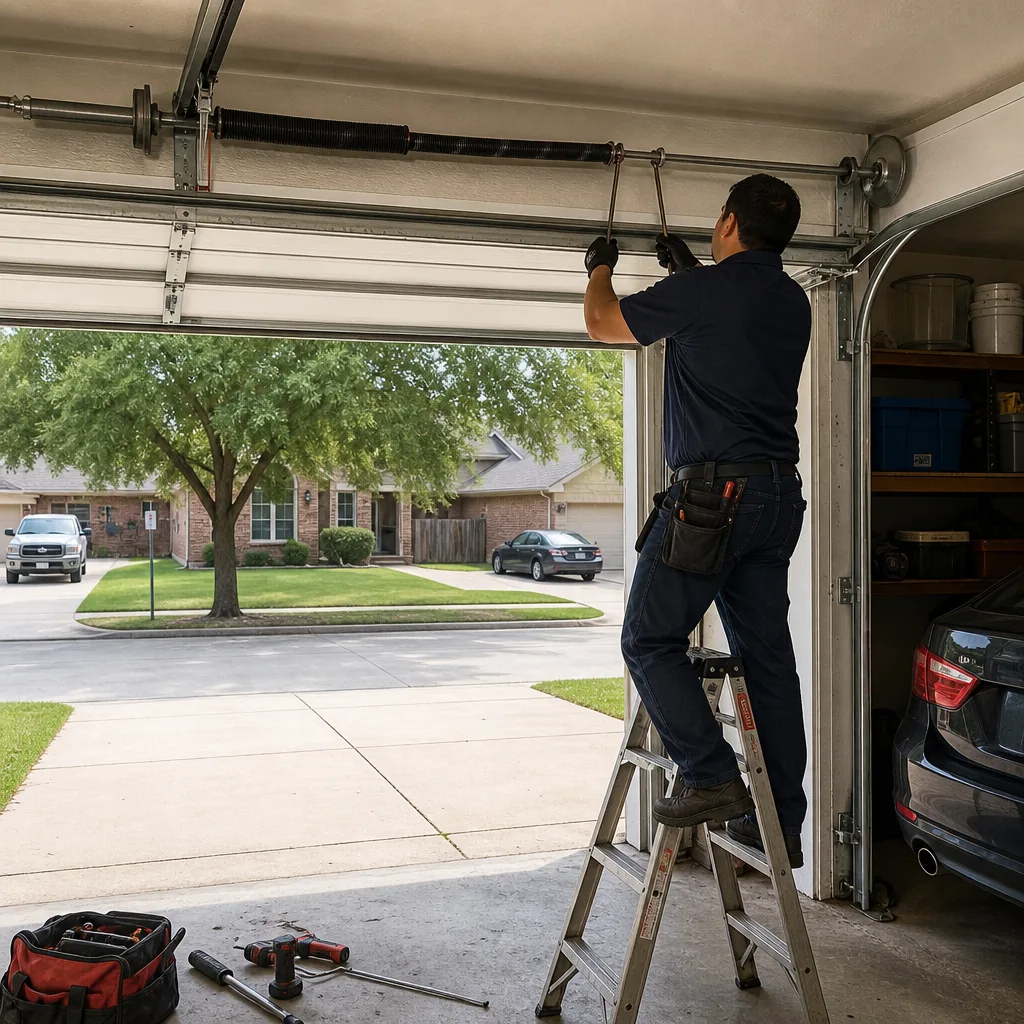
Full 25-point door and opener safety check with every visit - springs, cables, rollers, tracks, and your LiftMaster or Chamberlain opener included
You get a price before we start. It does not change when the truck arrives.

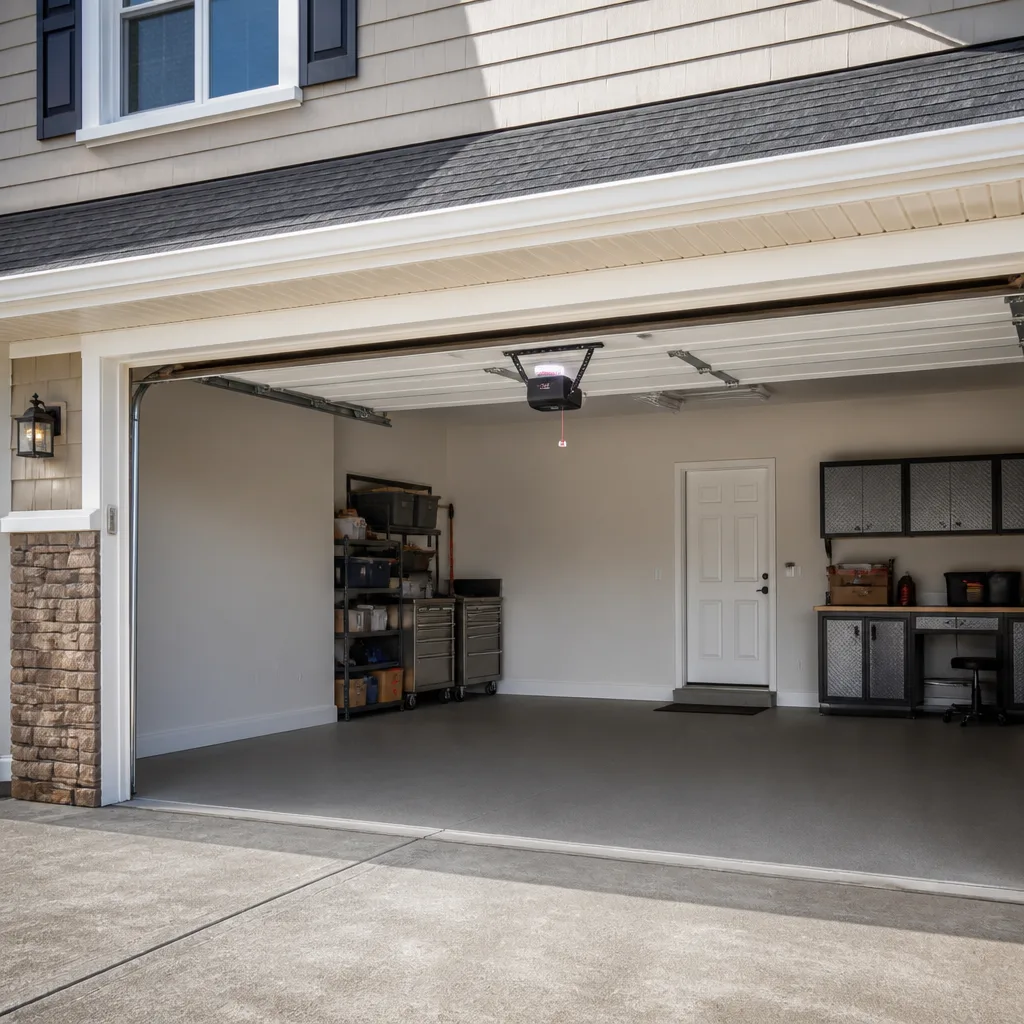
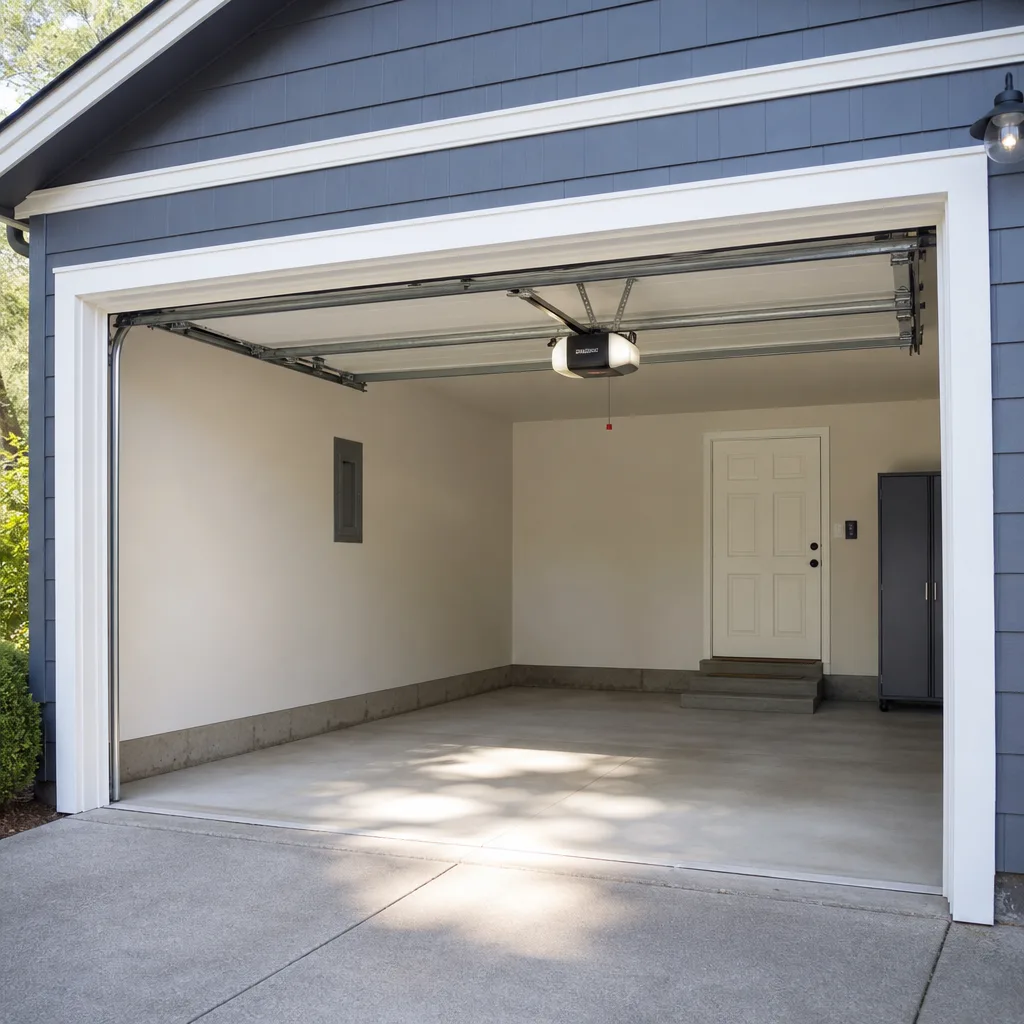
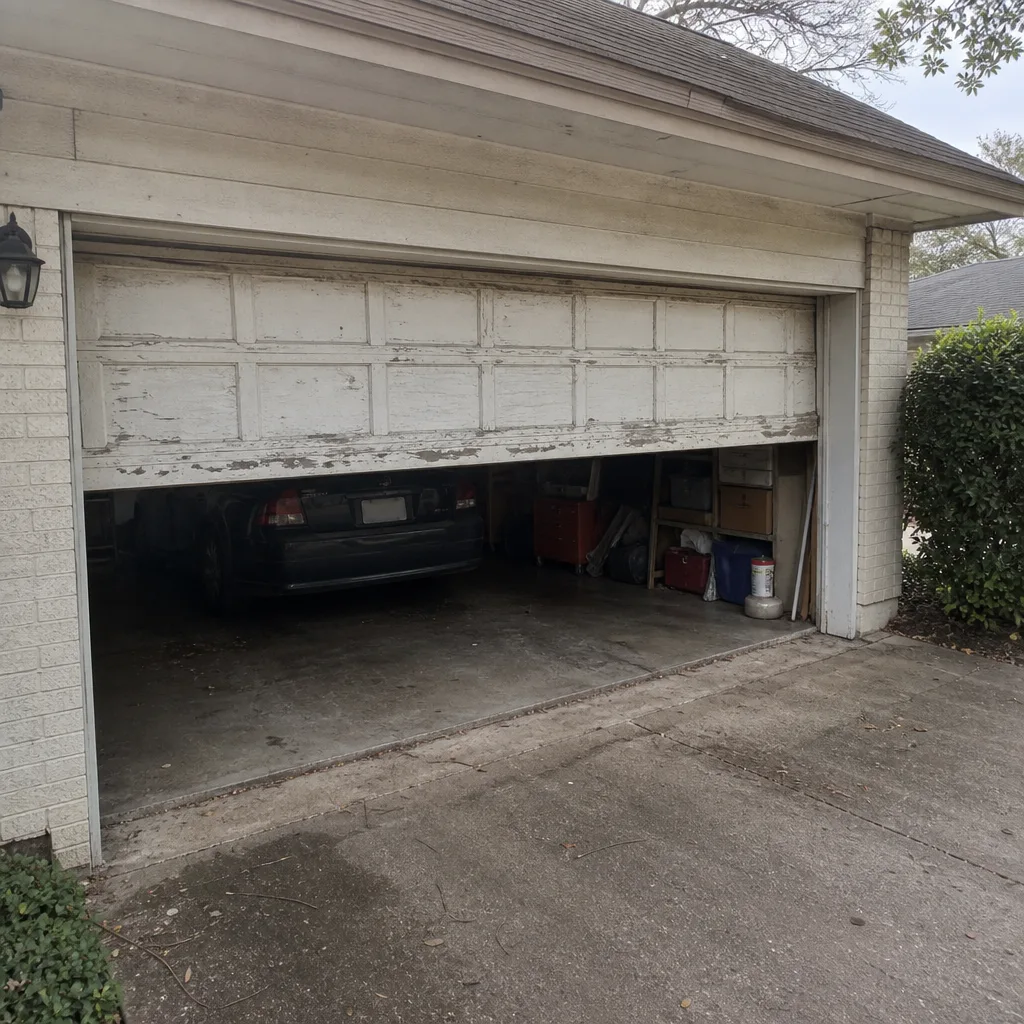 Before
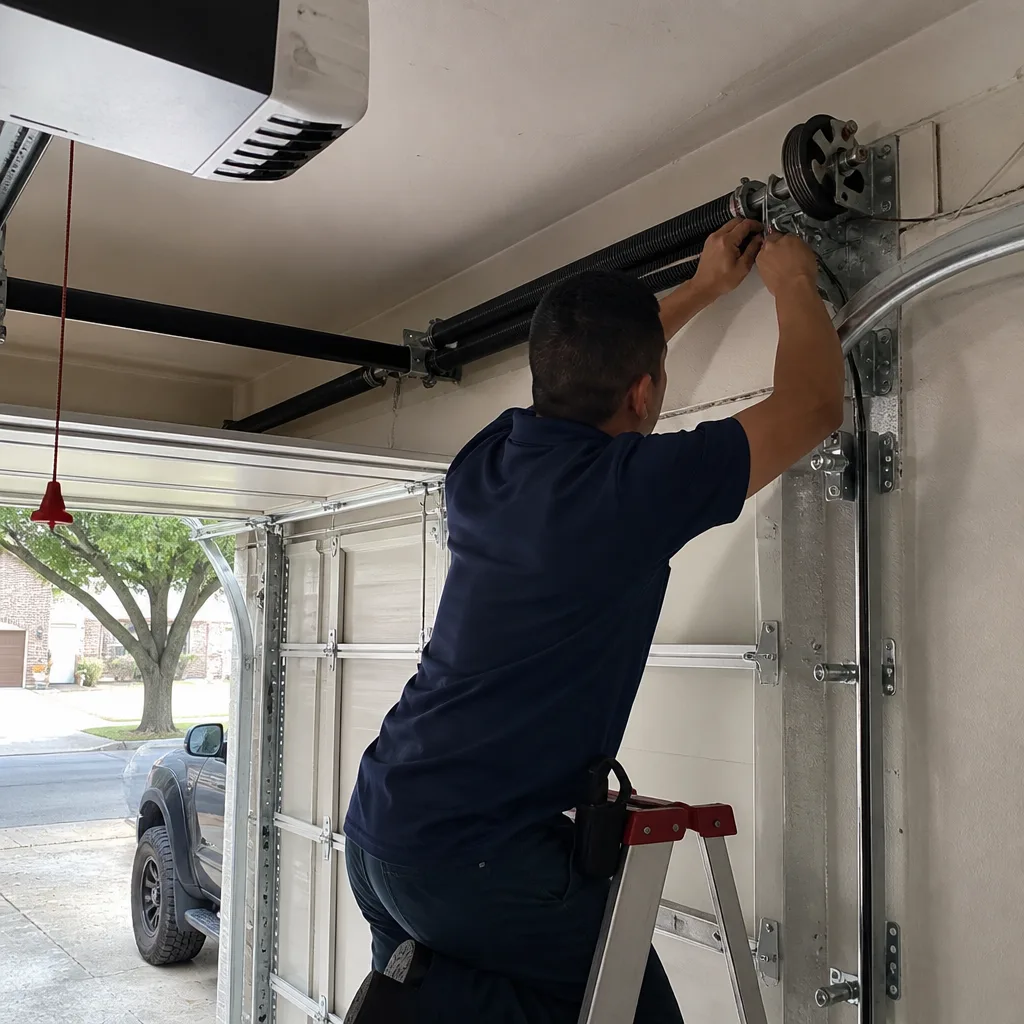 After
After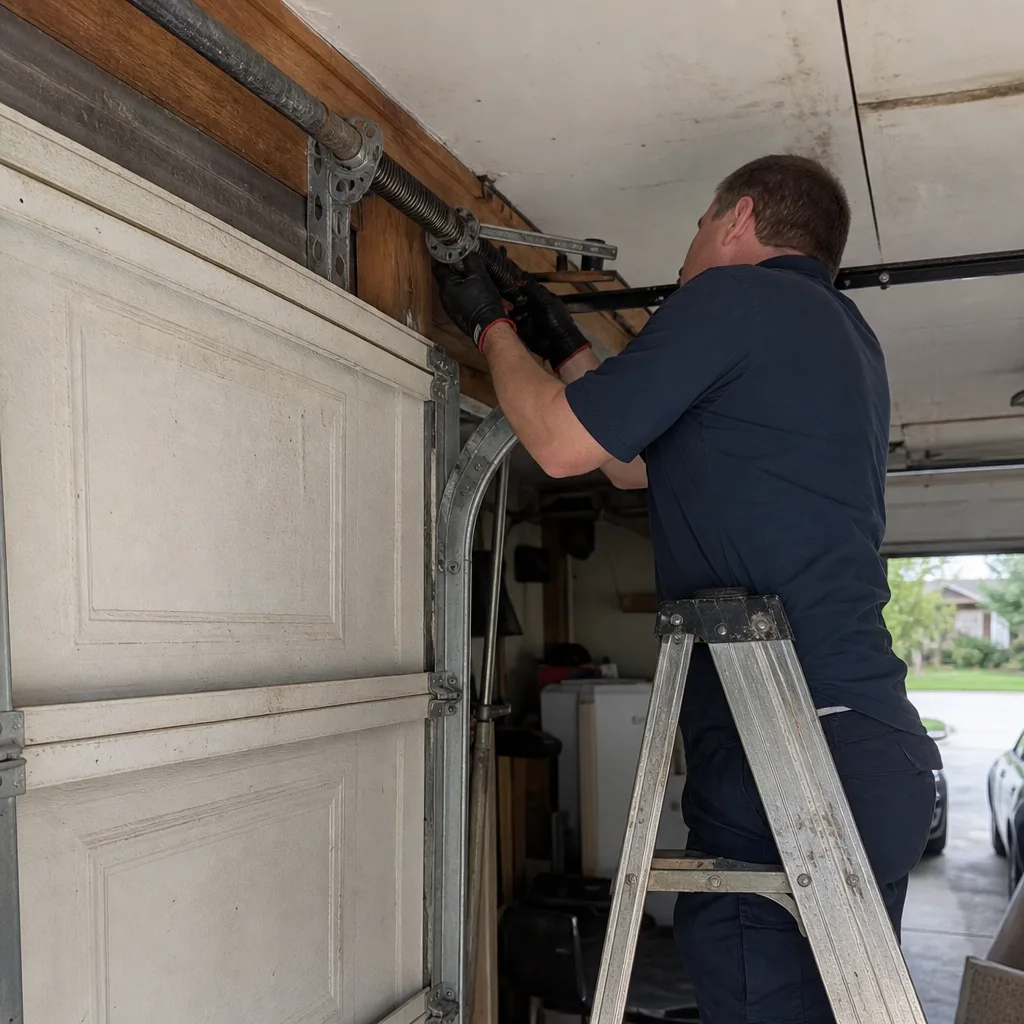 Before
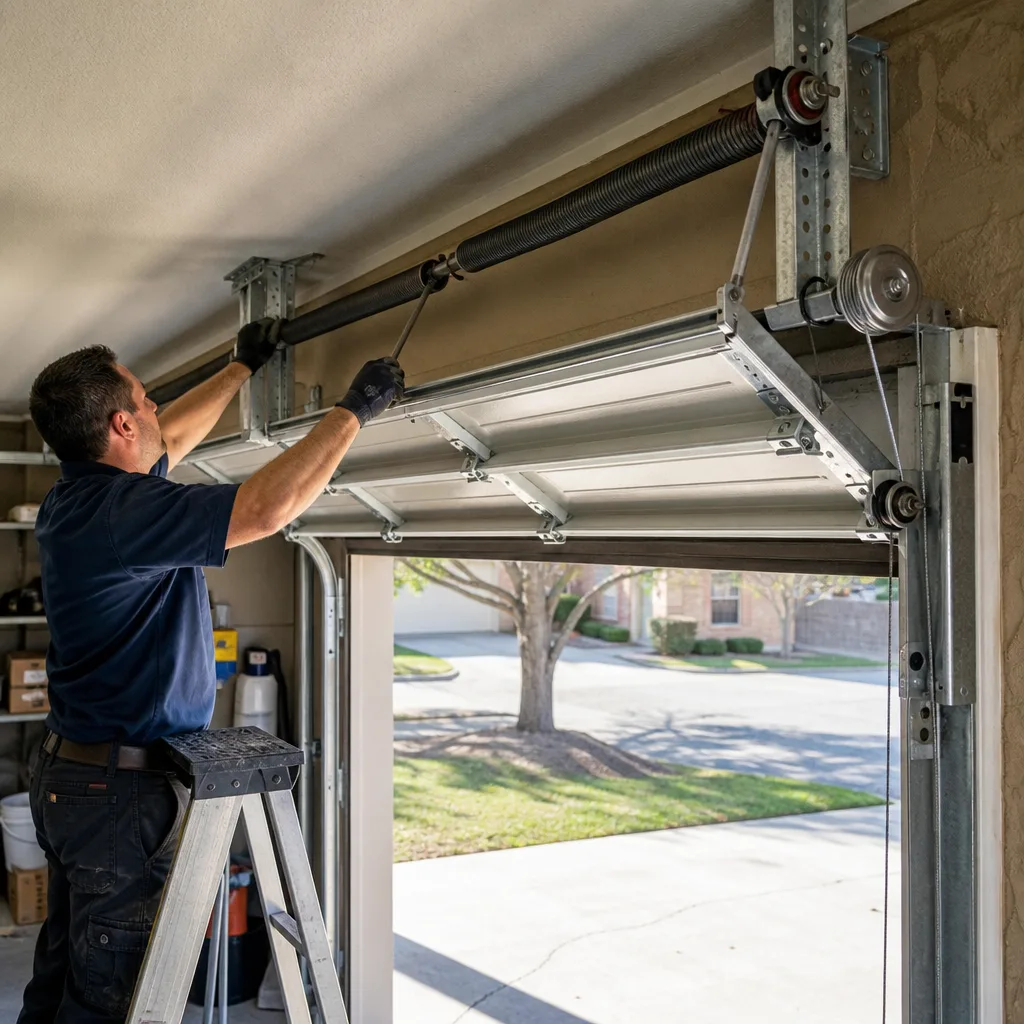 After
After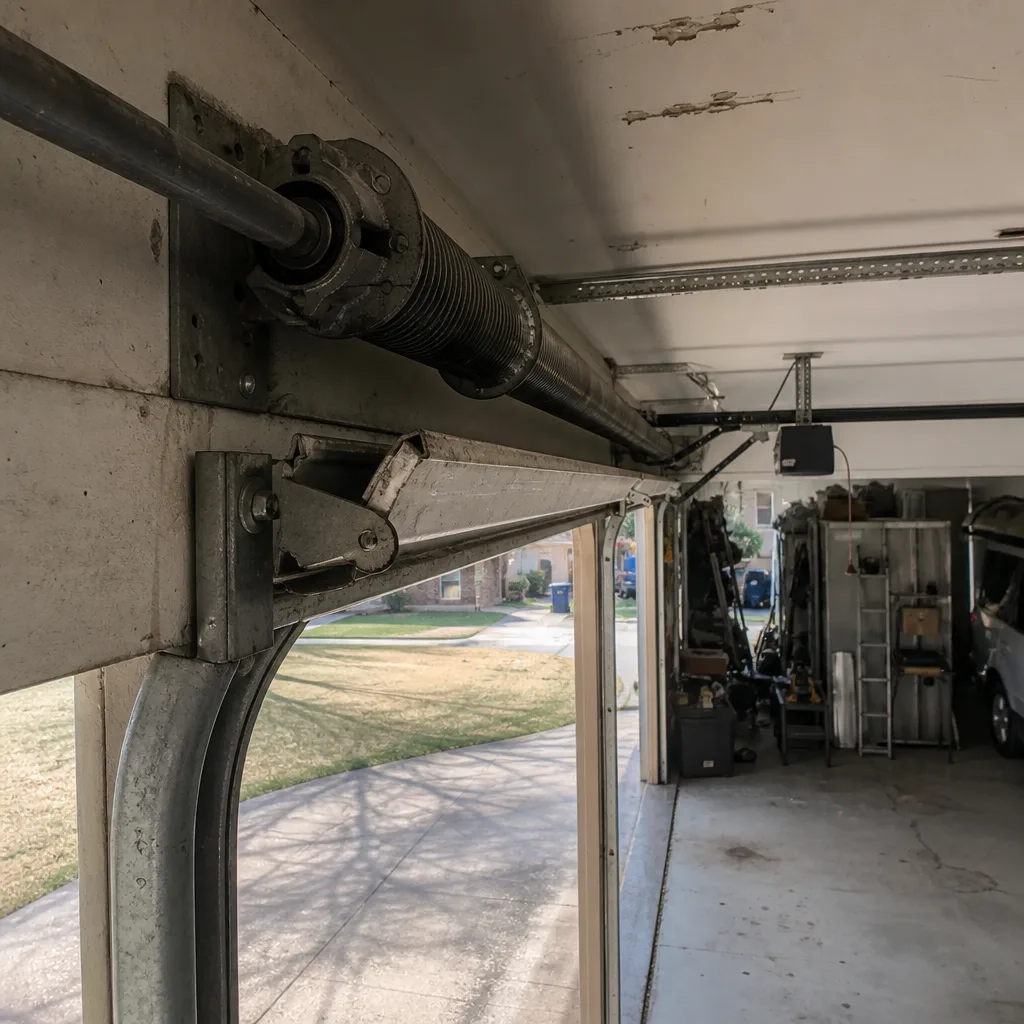 Before
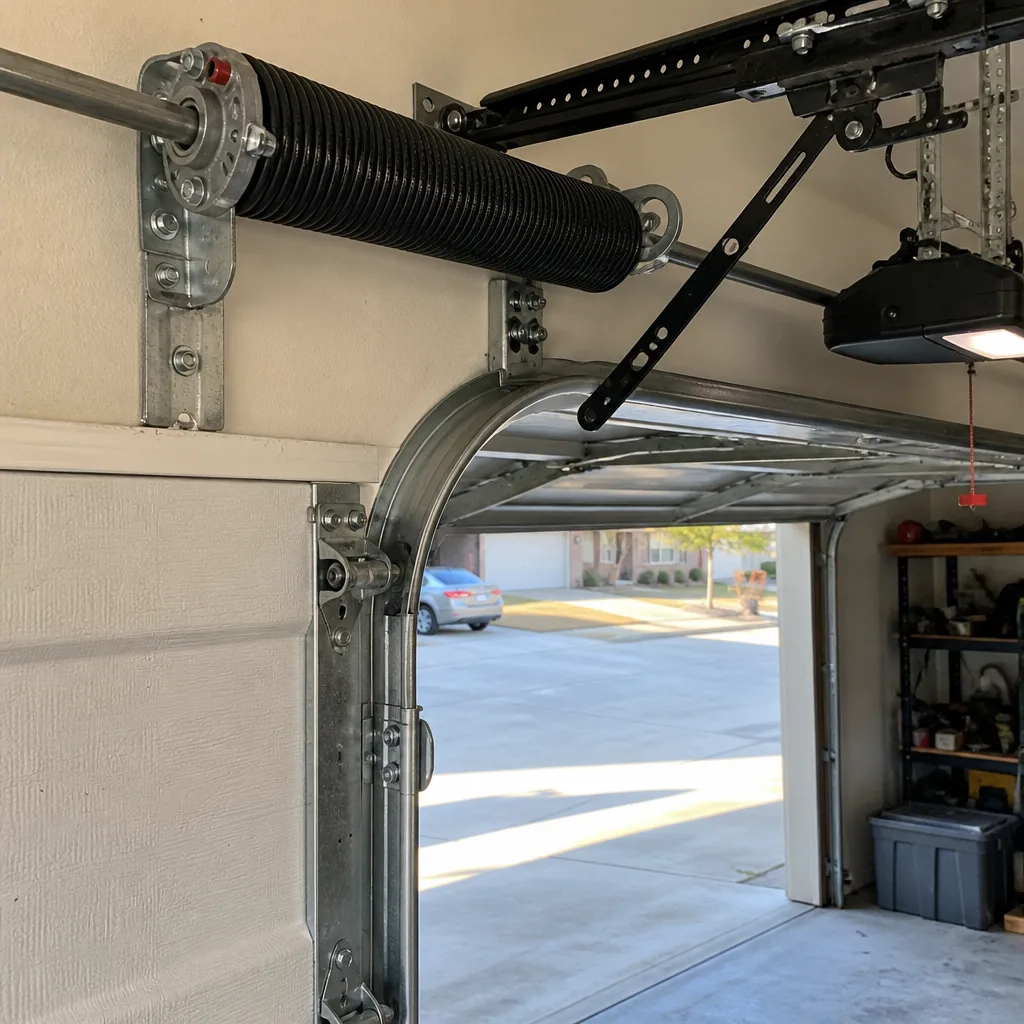 After
AfterDIY vs Professional Garage Door: The Mesquite Homeowner’s Decision Guide
A torsion spring on a double-wide garage door stores roughly the same energy as a mid-size sedan traveling 30 miles per hour. When that spring snaps, it releases that energy in a fraction of a second. That is not a scare tactic. That is physics, and it is the single most important fact to understand before you pick up a wrench anywhere near a garage door in Mesquite. But here is the part most guides will not tell you: that spring is one component out of roughly fifteen on a typical door, and most of the other fourteen are genuinely within reach of a homeowner who owns a tape measure, a ladder, and a willingness to read the manual. This guide walks through every common garage door task, separates the safe from the stupid, and gives you the straight numbers on cost, time, and risk so you can decide with your eyes open. For a deeper dive on pricing, see our Garage Door Cost Breakdown: The Mesquite Homeowner’s Reference for 2026.
Quick Answer
Most garage door maintenance in Mesquite is safely DIY-able: lubrication, sensor realignment, weather seal replacement, and remote programming take under an hour and cost less than $40 in parts. For a complete rundown, see our Garage Door Installation Maintenance Checklist for Mesquite Homeowners. Torsion spring replacement and cable work under tension are not DIY tasks under any circumstances, since the injury profile is documented, severe, and completely preventable. For everything in between, your decision comes down to whether you value three hours of your weekend more than the $75 to $150 a pro would charge for the same job.
Table of Contents
- The 15 Tasks on a Garage Door, Ranked by Risk
- What the Injury Data Actually Says
- Safe DIY Tasks: Step-by-Step for Mesquite Homeowners
- Borderline Tasks: When DIY Is Defensible and When It Is Not
- Never DIY: The Two Tasks With a Real Injury Profile
- The Real Cost of DIY: Time, Tools, and the Three-Trip Problem
- The Middle Path: Watch, Learn, and Build a Door You Understand
- What DIY Does to Your Warranty and Insurance
The 15 Tasks on a Garage Door, Ranked by Risk
Every garage door, whether it is a steel Clopay on a new build in Creek Crossing or a wood Raynor that has weathered twenty Texas summers near Paschall Park, is a system of interconnected parts. Understanding which parts carry stored energy and which parts are just metal on hinges changes how you approach the whole thing. Here is the honest breakdown we use when a Mesquite homeowner asks us whether they should tackle something themselves.
| Task | Risk Level | DIY Verdict | Typical Pro Cost in Mesquite |
|---|---|---|---|
| Lubricating rollers, hinges, and tracks | Low | Safe, do it twice a year | $45-$65 |
| Replacing weather seal on the bottom | Low | Safe, under an hour | $60-$90 |
| Aligning photo-eye sensors | Low | Safe, usually a bracket tweak | $50-$75 |
| Programming a new remote or keypad | Low | Safe, read the manual | $35-$50 |
| Tightening loose bolts and roller brackets | Low-Moderate | Safe if you avoid the bottom bracket | $45-$70 |
| Replacing a single panel | Moderate | Borderline, depends on door age | $250-$450 |
| Adjusting track alignment | Moderate | Borderline, easy to make worse | $85-$150 |
| Replacing extension spring safety cables | High | Do not DIY | $85-$130 |
| Adjusting opener force settings | Moderate-High | Borderline, easy to override safety | $45-$75 |
| Replacing torsion spring | Severe | Never DIY | $180-$340 |
| Replacing lift cables under tension | Severe | Never DIY | $150-$250 |
Notice something about that table: only two items carry the “never” label, and they are the two that involve parts under mechanical tension. Everything else is either straightforward maintenance or a borderline call that depends on your skill level and patience. The problem is that most garage door advice online lumps all of it together into one big “call a professional” warning, which teaches homeowners nothing and leaves them paying $70 for something they could have done in twenty minutes. We would rather you understand your door well enough to know exactly when the phone call is worth it.
What the Injury Data Actually Says
The U.S. Consumer Product Safety Commission has tracked garage door injuries for decades, and the data tells a very specific story. Between 1982 and 2022, the CPSC documented roughly 7,500 garage door related emergency room visits per year, but the critical detail is this: the serious injuries, the amputations, crush injuries, and deaths, are almost exclusively tied to two components. Torsion springs and lift cables under tension. Not photo eyes. Not weather stripping. Not remote controls.
A 1996 CPSC study that remains the reference point for the industry found that over a five-year period, garage door springs accounted for the majority of serious injuries, with the typical failure mode being a homeowner attempting to adjust or remove a torsion spring using improvised tools like screwdrivers or socket wrenches instead of the proper winding bars. The spring lets go, the winding bar becomes a projectile, and the injuries to hands, forearms, and faces are catastrophic. It is not that these homeowners were careless. It is that they did not understand the stored energy equation. A 250-pound garage door balanced by torsion springs means the springs are holding roughly 250 pounds of counterbalance force at all times. When you unwind one without the right process, that force has to go somewhere.
For contrast, the most common garage door injury overall is a pinched finger in a roller or section joint, and it is rarely serious. If you are working on a garage door in Mesquite and you are not touching springs or cables, your realistic risk profile is about the same as changing a ceiling fan. That is the honesty missing from most DIY-versus-pro discussions, and it matters because informed homeowners make better decisions than scared ones.
Safe DIY Tasks: Step-by-Step for Mesquite Homeowners
These four tasks are the ones every Mesquite homeowner should know how to do. They require no specialized tools, they cost almost nothing in parts, and they are the routine maintenance that keeps a door running quietly for twenty years. If you do these seasonally and know how to spot the signs of a failing spring, you are ahead of ninety percent of homeowners we meet.
1. Lubricate the Moving Parts Twice a Year
North Texas gets hot, dry summers and sudden cold snaps, both of which accelerate wear on metal-on-metal contact points. You want a silicone-based or lithium-based garage door lubricant specifically, not WD-40, which is a solvent and will strip existing lubrication. The parts to hit:
- Hinges at each section joint, both sides
- Rollers at the stem, not the wheel face
- The torsion spring itself, light coat along the coils
- Bearing plates at each end of the spring bar
- Lock and arm mechanisms
Ten minutes, twice a year, and you will hear the difference immediately. A door that squeals every time it opens in Creek Crossing is telling you it is running dry.
2. Replace the Bottom Weather Seal
Mesquite gets real rain in spring and fall, and a cracked bottom seal lets water, dirt, and field mice into your garage. The retrofit process is straightforward:
- Open the door about waist height and secure it with locking pliers on each track so it cannot roll down.
- Locate the retaining channel at the bottom of the door. Older doors use screws directly into the seal, newer ones use a T-channel that slides out sideways.
- Pull the old seal out. Take a section with you to the hardware store so you match the channel style and width exactly.
- Slide the new seal in from one end. Warm it in the sun for an hour first if it is below 50 degrees, which makes it pliable.
- Trim to length, close the door, check the seal makes full contact with the floor across the entire width.
This is a $20 fix that takes longer to drive to the store than to install. A garage door parts counter in Mesquite will have the exact weather seal for your door type if you bring the old section with you.
3. Realign the Photo-Eye Sensors
If your door will not close and the opener lights blink, the photo-eye sensors at the bottom of each track have likely been knocked out of alignment by a bumped garbage can or a kid’s bike. The fix:
- Check that both sensor units are still mounted firmly to the track. Tighten the wing nut if one is loose.
- Wipe the small round lens on each sensor with a dry cloth. Dust and spider webs in a Mesquite garage will trip these constantly.
- Look for the small LED on each sensor. Both should be solid, not blinking.
- Gently adjust the sensor angle until both LEDs are solid and the door closes normally.
This is a five-minute job. If you have done all that and the door still will not close, you may be looking at a wiring or opener logic issue, and that crosses into borderline territory.
4. Program a New Remote or Keypad
Every brand does this slightly differently, but LiftMaster and Chamberlain openers from the last fifteen years almost all use a learn button on the motor unit. Find the colored button, press it, you have 30 seconds to press the button on your new remote, done. Genie uses a similar process with a different button location. The manual for your opener model is usually a free PDF away on the manufacturer’s site, and replacing a lost remote is one of the easiest wins in home maintenance. If you would rather have it done for you, an opener service call in Mesquite handles this in about ten minutes flat.
Borderline Tasks: When DIY Is Defensible and When It Is Not
There is a middle band of garage door work where the answer is not obvious, and the right call depends on your mechanical comfort, your time budget, and how much you value the door looking and operating correctly when you are done. Here is the honest read on the two most common borderlines we hear about in Mesquite.
Single Panel Replacement
A dented bottom panel from a mower deck or a basketball is a common fix request, and on a newer door with matching panel availability, it is possible to do it yourself. You unbolt the damaged panel, swap in the new one, and reassemble. But here is where it gets tricky: if your door is more than eight years old, the exact panel color and embossing may no longer be made, and you will have a visible mismatch forever. The second complication is that the bottom panel is where the lift cables attach, and removing it means temporarily releasing cable tension. That is not a guess-and-check situation. The third factor is weight. A single steel panel on a double door can weigh forty to sixty pounds, and maneuvering it into place while holding the section alignment pins is a two-person job at minimum.
Our honest recommendation: if it is above the bottom section and you have a matching panel and a helper, go for it. If it is the bottom panel or there is any question about cable attachment, call someone who has done fifty of them.
Track Alignment Adjustments
The vertical and horizontal tracks guide the rollers and keep the door moving in a straight line. When a door binds or scrapes, a track is usually out of square, and in theory, you loosen the mounting bolts, straighten the track, and retighten. In practice, the tracks are under constant side load from the door’s weight, and loosening the wrong bolt at the wrong time can cause the door to shift suddenly. Most track tweaks we make in Mesquite garages take us twenty minutes with a level and the knowledge of exactly which mounting points to adjust first. A homeowner working without that muscle memory can easily turn a $100 adjustment into a $400 repair by knocking a track far enough out that a roller pops free.
The reasonable boundary line is this: if you can see visible slack or misalignment and the fix is tightening a few clearly loose bolts, do it. If the door has been binding for weeks and you are not sure where the problem originates, you are guessing, and guessing on a 200-pound moving door is how small problems become big ones.
Never DIY: The Two Tasks With a Real Injury Profile
There is no version of this guide that tells you to replace a torsion spring yourself. We are not going to soften it, and we are not going to walk you through the steps. What we will do is explain exactly why this is the line that never moves, so you understand the risk you are avoiding.
A torsion spring is wound under tension on a bar above the door opening. The springs on a typical double door in a Mesquite home are wound between seven and eight full turns when the door is closed, and each turn stores additional foot-pounds of torque. The winding bars used to adjust these springs are eighteen inches long for a reason: that length gives you mechanical leverage, but it also means that when a spring lets go unexpectedly, the bar turns into a spear moving at speeds that have broken forearms and taken fingers clean off. The documented cases are not rare. They are not fringe. They are regular enough that every garage door professional in this industry knows someone who knows someone.
Lift cables carry the door’s weight from the bottom brackets up to the drums when the door is opening. When a cable frays or snaps under that load, the door drops unevenly, and anyone whose hand or head is in the path is in real danger. Replacing a lift cable requires releasing the spring tension first, and that loops you right back into the torsion spring problem. There is no safe shortcut. There is no YouTube video that replaces years of hands-on training when the consequence of a mistake is a trip to Baylor Scott & White in an ambulance.
The duty-of-care statement here is plain: never attempt to adjust, remove, or replace a torsion spring or lift cable on your own. If your door is sagging to one side, if you hear a bang like a gunshot from the garage, if the door will not stay up, call a trained professional. The $200 to $350 you will spend in Mesquite is less than your emergency room copay, and unlike a DIY attempt, it comes with a guarantee that the door is balanced correctly and the springs are rated for the door’s weight and cycle life.
The Real Cost of DIY: Time, Tools, and the Three-Trip Problem
The most misleading number in every DIY-versus-pro discussion is the parts cost. A weather seal is $20, so the comparison gets framed as $20 versus $90, and that sounds like a clear win for DIY. What that math ignores is the trip to the hardware store, the second trip when you bought the wrong seal profile, the third trip for the right fasteners, and the hour of bent-over frustration trying to install a cold, stiff rubber seal in a garage that is forty degrees in January. Real DIY cost is not parts. It is time plus tools plus frustration plus the value of a job done right the first time.
Let us put real numbers on it. The average homeowner in Mesquite who replaces a bottom seal themselves spends two to three hours all in, including store trips, and about $35 in parts. The same job done by a professional takes thirty minutes and costs $70 to $90. If you value your time at anything above minimum wage, the professional job is arguably cheaper. That math flips for a simple task like sensor realignment, which takes five minutes either way and really is a no-brainer to do yourself.
The tools matter too. Lubrication needs a $12 can of spray. Programming a remote needs nothing. But panel replacement needs a second set of hands, a socket set with the right sizes, and ideally a pair of locking pliers to secure the door against the track. Track work needs a level and the judgment to know which bolt to loosen first. Every borderline task has a hidden tool or judgment component that a professional already owns, which is part of what you are paying for when you call one. For the full picture of what parts typically cost in this area, the parts page for Mesquite breaks down the common items and their honest local prices.
The Middle Path: Watch, Learn, and Build a Door You Understand
There is a third option in this whole DIY-versus-pro debate that almost nobody talks about, and it is the one we like best. When you call us out to a Mesquite home for a repair or a maintenance tune-up, you are welcome to watch. Not in a hovering-over-the-shoulder way, but genuinely watch and ask questions. We will show you how to spot a spring that is near the end of its cycle life. We will explain how to check the balance by pulling the release cord and lifting the door by hand. We will show you the lubrication points and the warning signs of a track that is starting to drift. A customer who understands their door is a customer who calls us before a small problem becomes a big one, and that is a relationship we would rather have than a one-and-done transaction.
This is not something every company offers, because it takes an extra fifteen minutes on every call and it does not generate a line item on the invoice. But Otto has been doing this since 2004, and the name on the van is the same name on the invoice. If you want to learn how your door works, he will teach you. The Otto’s Garage Door home page has the full story on how we operate and what the 90-Day Done Right Promise covers. Every service call in Mesquite comes with that promise in writing, which means if something is not right ninety days after the job, one call brings Otto back, no runaround.
What DIY Does to Your Warranty and Insurance
Before you pick up a wrench on any garage door work beyond basic lubrication, there are two documents you should read, and almost nobody does. The first is your door and opener warranty. Many manufacturer warranties, particularly from Chamberlain, LiftMaster, and Raynor, include language that voids coverage for component failures caused by improper installation or unauthorized modification. A torsion spring you replaced yourself that then fails and damages the door may not be covered, and the door manufacturer may deny a related claim on the panels because the spring work was not done by a qualified installer. The specific language varies by brand and model, but the phrase to look for is “installed by a qualified service professional” or similar. If that language is in your warranty, DIY spring work is not a money-saving play, it is a warranty cancellation.
The second is your homeowner’s insurance policy. A door that fails because of improperly installed hardware, and the resulting damage to the door, the opener, or anything stored in the garage, may not be covered if the insurer determines the work was not done to an acceptable standard. Insurance adjusters are not garage door experts, but they do know how to deny claims when the damage traces back to unpermitted or unprofessional work. For a Mesquite homeowner with a $1,000 deductible, that math gets ugly fast.
This is not a scare tactic. It is a documentation reality that most DIY guides never mention, which is exactly why we are mentioning it here. The tasks we have told you are safe to DIY, lubrication, sensor alignment, seal replacement, remote programming, none of those touch your warranty or your insurance. They are homeowner maintenance, full stop. The tasks we have told you to avoid are the exact same ones that can cost you your coverage.
Common Mistakes to Avoid
- Using WD-40 on everything. It is a solvent, not a lubricant, and it strips the grease your door needs. Use a silicone or lithium spray made for garage doors, not whatever can is on the shelf in the Mesquite garage.
- Ignoring a door that is getting louder. A grinding or squealing noise is the early warning that a spring or roller is wearing out. Catching it at the noise stage is a $150 fix. Ignoring it until the spring snaps is a $300 fix plus the possibility of a door stuck shut with your car inside.
- Trying to adjust a torsion spring with whatever tools are in the kitchen drawer. Screwdrivers and socket wrenches are not winding bars. This is the single most common cause of serious garage door injuries, and it is completely avoidable by simply not doing it.
- Replacing a bottom panel without knowing whether the exact color match is still made. You can end up with a two-tone door that looks worse than the dent did, and you will have spent $300 on the panel.
- Loosening track bolts without understanding which ones are carrying the door’s weight. The wrong bolt at the wrong time drops the door off the track, and now you have a real repair on your hands instead of an adjustment.
- Assuming the opener is the problem when the door is struggling. If the opener is straining, the problem is almost never the opener. It is a spring that has lost tension or a door that is out of balance, and no new opener from any brand will fix that.
When to Call a Professional
Call a professional the moment the job touches a torsion spring or a lift cable. That is the rule, full stop. Beyond that, call when the door is visibly sagging to one side, when it slams down instead of closing smoothly, when the opener is grinding and no amount of lubrication changes it, or when you have already spent an hour on a borderline task and made it worse. A door is 200 pounds riding on two springs. Respect it. Otto’s Garage Door offers free estimates in Mesquite, and the price you hear on the phone is the price on the invoice when the job is done. Call (817) 623-0734 and you will get a live person, not a menu, any time of day or night.
Frequently Asked Questions
Torsion spring replacement in Mesquite typically runs $180 to $340 depending on the door weight, spring size, and whether we replace one spring or both, and that includes the new springs, labor, and a balance check. We recommend replacing both springs at once because they wear at the same rate, and the second one is usually not far behind the first. Call (817) 623-0734 for an exact quote on your door, it takes about ten minutes on the phone.
You can if the panel is above the bottom section, the exact color match is still available from the manufacturer, and you have a second set of hands, but bottom panels involve cable tension and are not a safe DIY job. The panel itself will run $150 to $400 depending on the door brand and size. If you are not sure whether your panel line is still produced, we can check in five minutes before you spend anything.
No. The price Otto quotes on the phone is the price on the invoice, and that is a promise we have kept since 2004. If he gets to your door and finds something unexpected, he will show you exactly what he found, explain your options, and get your approval before any additional work begins. You will never open a bill that does not match the number you were quoted.
Yes, for the overwhelming majority of repair calls. We stock torsion springs in all the common sizes for Mesquite’s housing stock, plus lift cables, rollers, hinges, sensors, and weather seal for Clopay, Amarr, Wayne Dalton, and Raynor doors. Most repairs are done on the first visit, and if your door needs a specific part we do not have on board, we will get it and get back out, and the original quote still holds.
A well-maintained steel garage door in North Texas should last twenty to twenty-five years, with the springs lasting seven to ten years depending on how many cycles you put on them. The Texas heat shortens spring life compared to cooler climates, which is why many Mesquite homeowners replace springs twice over the life of the door. The installation page for Mesquite covers what to expect from a new door if yours is near the end of that lifespan.
That is exactly how we like to work. We will come out, do a full tune-up and safety check, and walk you through everything you need to know to keep the door running right between service visits, including the lubrication points, the balance test, and the warning signs of a spring that is nearing the end of its life. A homeowner who knows their door is the best kind of customer. Call (817) 623-0734 and ask for a maintenance tune-up, and we will set it up.
The Bottom Line
Most garage door work is not the death trap that scare-tactic marketing makes it out to be, and two specific tasks genuinely are the death trap that every warning describes. If you want more guides & resources for keeping your door safe and running right, we have plenty. The skill in being a smart Mesquite homeowner is knowing which is which. Lubricate your own door. Fix your own sensors. Replace your own weather seal. But when a spring lets go in the middle of the night and your vehicle is sealed inside, do not become another CPSC statistic. Call the person whose name is on the van, not a dispatch center three states away. The price is quoted upfront, the guarantee is written on every invoice, and the same person who answers your call at nine o’clock at night is the one who shows up at your door.
Written by Otto Reinhardt, Owner at Otto’s Garage Door, serving Mesquite since 2004.